
Alarm clocks for children’s bedrooms
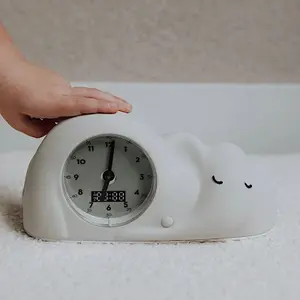
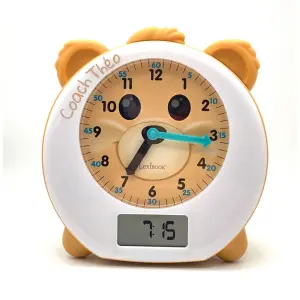




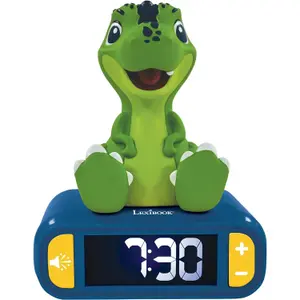


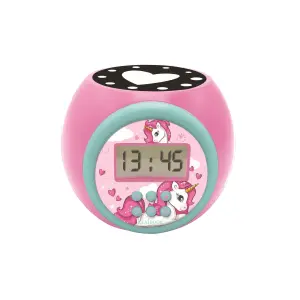
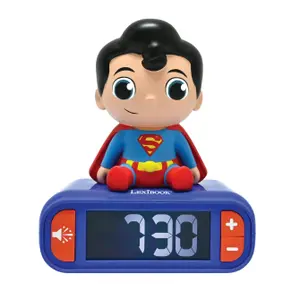







The children’s alarm clock marks a milestone: knowing when the night is over, then getting up for school on your own. Karlsson, a Dutch brand known for its stylish clocks, offers them in a range of designs, from the double-bell Mini Twin Bell to the bamboo Mini Cube, the cow-patterned Peekaboo Cow and the portable Travel Square.
Learning to tell the time, one clock face at a time.
Which alarm clock to choose for your child’s age
Before they can tell the time, a three- or four-year-old understands an image or a colour better than a clock face: so-called day-and-night clocks show a sun or change colour when it’s time to get up. This helps them learn to wait in bed without waking the whole house early in the morning.
At around six or seven, when primary school covers telling the time, an analogue alarm clock is a great learning aid: large numbers, clearly different hands, and your child can check for themselves how long they have before it’s time to leave. At around eight or ten, they can set their own alarm for school.
Night lights and bedside lights
An alarm clock takes care of the morning; for the evening and night, night lights give off a soft glow that helps children feel safe at bedtime and guides them when they get up in the night. Lamps, night lights and alarm clocks are all in the night light category, so you can put together your child’s sleeping area in one visit.
Hands or digital display
An analogue clock face shows time passing: your child can see the hand move towards the number they’re waiting for, which helps them understand durations, quarter-hours and half-hours. It’s the best format for learning to tell the time. A digital display is quicker to read, including in the dark if it’s backlit, but it only shows a single time and assumes your child can read numbers up to fifty-nine.
For the bedroom, check how noisy the mechanism is: a continuous sweep second hand, with no ticking, won’t stop a sensitive child from falling asleep.
Bamboo, concrete and bells: Karlsson alarm clocks
Karlsson is part of the Dutch Present Time group and works with designers from around the world. Its alarm clocks play with materials: the warm bamboo of the Mini Cube and Retro Radio, the raw concrete of the Honeycomb, and the exposed bells of the Blob Bell and Mini Twin Bell, whose clear ring is ideal for heavy sleepers. The flat, lightweight Travel Square slips into a suitcase for the holidays.
These graphic designs appeal to children and teenagers alike and fit into a bedroom that grows with them, without overly childish patterns they’ll soon tire of.
An alarm clock to give as a present, from Christmas to back to school
A first alarm clock is a meaningful present, often given when a child starts primary school. Black Friday bedroom deals and the festive season make it a good gift idea for seven- or eight-year-olds, while the winter sales are a chance to replace a model that has fallen off the bedside table. After the spring French Days and summer sales comes the back-to-school season, when the alarm clock comes back into use. Find new models in new bedroom arrivals and end-of-line offers in bedroom clearance.
Frequently asked questions
How can I teach my child to get up with their alarm clock?
Set the alarm with them in the evening, then let them turn it off and get up on their own for a few mornings in a row, without stepping in. Put the alarm clock just out of reach of the bed: your child will have to get up to turn it off, which helps stop them falling back asleep.
What batteries does a child’s alarm clock need?
Most use an AA or AAA battery. Check that the battery compartment closes securely, ideally with a screw, and keep spare batteries out of reach: swallowing a button battery is a medical emergency.
Should I choose a light-up alarm clock or one with an alarm sound?
An alarm sound is still the most effective for school, especially for children who sleep deeply. A backlight helps them read the time at night; just avoid a very bright, blue-tinted display facing the pillow.
Can an alarm clock be used for homework?
Yes, it helps break up the time: fifteen minutes of reading, then a five-minute break. An analogue clock face makes the duration visible, and your child learns to organise their work without constantly asking how much time is left.
Which model should I take to the grandparents’ house?
A small travel alarm clock, flat and light like the Travel Square from Karlsson, gives your child a familiar point of reference in an unfamiliar bedroom. Set it to their usual wake-up time to keep to their weekday routine.













