
Cribs, co-sleepers and beds for baby’s sleep

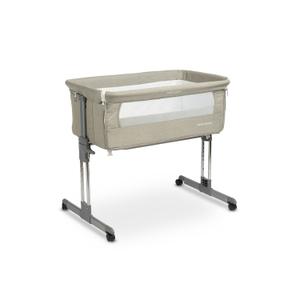
During French Days, the cots and beds selection covers sleeping arrangements from birth through the early years: the Lionelo Leonie bedside cot, which attaches to the parents’ bed, and the Essentiel travel cot for nights away from home. This online shopping event, launched in 2018, returns in spring and September, often a few months before a baby is due.
A cot, a baby’s first essential piece of equipment.
Cradle, bedside cot or cot, depending on your baby’s age
A cradle or bedside cot is suitable for a newborn during their first few months, as long as they can’t roll over or try to sit up. A bedside cot is attached to the parents’ bed, with one side lowered. This makes night-time feeds easier while giving the baby their own sleeping space. The Leonie by Lionelo, a Polish childcare brand, can be adjusted to several heights to line up with the parents’ mattress. With the side raised, it becomes a separate cot and can be used until the baby weighs nine kilos.
Next comes the cot, usually 60 x 120 centimetres, which can be used until the age of two or three thanks to its height-adjustable base.
Plan storage around the sleeping area
Keep the area around the cot clear: don’t put any furniture nearby that your child could climb on to get over the cot sides, or hang a shelf above their head. The wardrobes, clothes rails and bags on the storage page help keep clothes, nappies and bedding away from the sleeping area. If the cot has a drawer underneath, use it for spare fitted sheets and sleeping bags, close at hand for night-time changes without having to cross the room in the dark.
EN 716 and EN 1130 standards: what to check on a cot
In Europe, fixed and folding cots for domestic use are covered by the EN 716 standard, while cradles and bedside cots are covered by the EN 1130 standard. These standards cover stability, the strength of the joints and the absence of trapping points. The gap between cot bars must be no more than 6.5 centimetres, so a child’s head can’t slip through.
Whether buying second-hand or new, check that no screws are sticking out, that the base is locked in place and that removable sides lock securely. A folding cot should open with latches that click firmly into place: check them every time you set it up, especially after transporting it by car.
Mattress and bedding: a firm, clear sleeping space
The mattress must fit the cot exactly: if you can fit more than two fingers between its edge and the side, it’s too small. It must be firm, so the baby’s head doesn’t sink into it, and covered with a taut fitted sheet. Never add a second mattress on top of the original one in a folding cot: the extra height reduces the sides’ height and creates gaps where the child could get trapped.
At night, a sleeping bag suited to the room temperature replaces a duvet, pillow and blanket, which are not recommended before the age of one. Also remove cot bumpers and soft toys, as they can restrict airflow around the baby’s face.
Choosing a cot during the French Days and beyond
Ideally, buy the cot during the third trimester of pregnancy, so you have time to put it together and air it out. Black Friday and the year-end holidays are good times to make this important purchase, as are the winter sales. The spring and September French Days offer another opportunity, as do the summer sales, before the new school year and the move to a bigger bed. The special offers are another option.
Frequently asked questions
Can a folding cot be used every night?
Yes, if it complies with the EN 716 standard and is used with its original mattress. However, it’s less comfortable than a standard cot over time, as its thin mattress is designed for occasional nights at the grandparents’ or on holiday.
Should I get a new mattress for a second-hand cot?
It’s strongly recommended: a used mattress loses its firmness and may have developed a dip where the previous child slept. A new mattress that fits the cot exactly provides a flat, hygienic sleeping surface.
Where should I put the cot in the baby’s room?
Place it away from windows, radiators and blind or curtain cords, against an internal wall if possible. Leave enough space around it to lean over comfortably during night-time wake-ups.
Is a bedside cot safe for a newborn?
Yes, if it is firmly attached to the parents’ bed, with no gap between the two mattresses, and the baby sleeps on their own surface. However, health authorities advise against sharing the same mattress as the parents.
Which cot base position should I use as my baby grows?
The highest position makes it easier to care for a newborn without straining your back. Lower the base as soon as your baby can sit up or get onto their knees, then move it to the lowest position when they can stand while holding onto the cot bars.













