
Baby trousers, from joggers to waterproof trousers


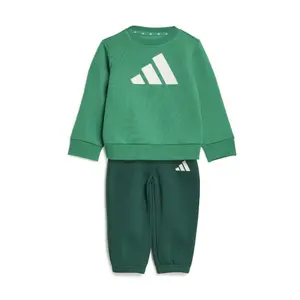


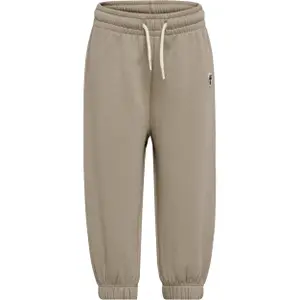


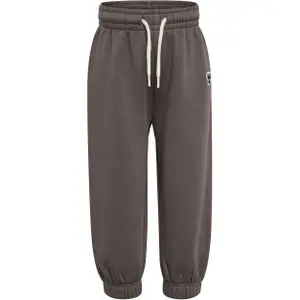

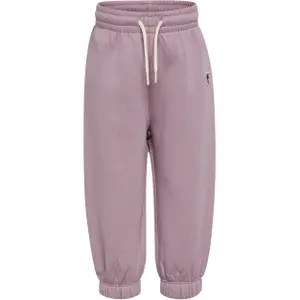

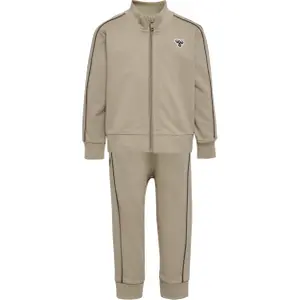

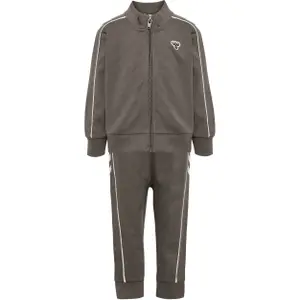
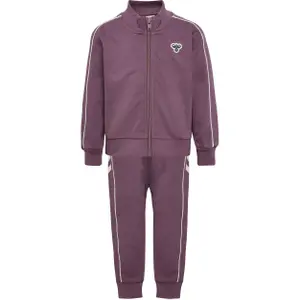


A good baby trousers leave room for a nappy, don’t dig into the tummy and move with your child as they crawl and take their first steps. Fleece joggers for home and nursery, polar fleece for cold days, waterproof or softshell trousers for puddles: each style has its own purpose. The range includes Hummel, Playshoes and Reima.
An elasticated waist, plenty of room at the knees.
Baby joggers: elasticated waist and ribbed cuffs
Jogging bottoms are the most-worn type of trousers before the age of three, and for good reason: the elasticated waist fits over a nappy without squeezing it, while the ribbed cuffs stop the legs from dragging under the feet of a child who is walking. The fleece, soft on the inside, keeps the warmth in at floor level, where little ones spend their days.
Hummel, a brand founded in Hamburg in 1923 and recognisable by its chevrons, has made them a speciality: the hmlAidan, hmlKris, hmlSkye and hmlLogun styles offer the same comfortable fit in several colours and prints, such as the Paisley pattern. The hml prefix, found across the range, simply represents the brand's name.
Bodysuits, dungarees and jackets: what to pair with trousers
Trousers go with a top that stays in place: a bodysuit tucked into the waistband keeps little tummies covered, and baby T-shirts can be worn over the top. Dungarees, with their shoulder straps, are an alternative for children whose trousers keep slipping down. The Baby outfits page has matching tops and bottoms, and for going out, baby jackets and all-in-ones complete the outfit.
Rain trousers and softshell for wet days
For the park after rain or nursery outings in all weathers, waterproof trousers mean you won't have to change your child from head to toe. Reima Lammikko, from the Finnish brand founded in 1944, is made with welded seams, a PVC-free polyurethane coating and a waterproof rating of 10,000 mm; its adjustable braces and removable elasticated foot straps keep it in place. The smallest sizes start at around twelve or eighteen months.
Softshell trousers, such as the Hummel Jupitor Tex Mini for girls, are more flexible and breathable: they're suitable for drizzle and wind, and can be worn all day without making your child sweaty.
Fleece and sizing: keeping a baby's legs warm
When it's cold but not raining, fleece trousers are the lightest warm option. Those from Playshoes, a German brand based in Albstadt, Baden-Württemberg, are designed for older babies: they can be worn on their own at home or under rain trousers to add an insulating layer.
When it comes to sizing, go by your child's height rather than their age: twelve months is around 74 cm, eighteen months 81 cm, and twenty-four months 86 cm. Baby trousers should have a little room around the bottom for a nappy; if the waistband digs in or you can see the ankles when your child is sitting down, go up a size. Turn-up styles can be lengthened in a moment and last a few weeks longer.
Baby trousers on offer: buy ahead
Babies wear out and grow out of trousers quickly, so major sales events are a good time to pick up a few pairs in the next size. Black Friday and the Christmas period come around when you're looking for warm or fleece trousers. The winter sales, followed by the spring French Days, are a good time to shop for rain trousers for the in-between seasons. During the summer sales and the back-to-school period, the clothing clearance page brings together end-of-line styles, while new clothing features the latest colours.
Frequently asked questions
What fabric should I choose for a baby who crawls?
Cotton fleece or a thick jersey stands up to knee friction better than a lightweight woven fabric. For outdoors, softshell or coated trousers protect against damp from the ground; indoors, flexibility matters more than durability.
How can I tighten trousers that are too loose at the waist?
Many children's trousers have an internal buttonhole elastic that can be adjusted in seconds. Otherwise, tucking a bodysuit into the waistband or sewing an elasticated belt inside can help until your child grows.
How can I repair a hole in the knee of baby trousers?
An iron-on patch on the inside, followed by a decorative patch sewn on the outside, will hold up well in the wash. Fix it as soon as you spot the first snag: a small hole can quickly get bigger on a child who crawls.
Are rain trousers worn over another pair of trousers?
Yes, that's what they're for: wear them over jogging bottoms or fleece trousers, depending on the temperature. Choose a size with enough room for the layer underneath, but not so much that it restricts your child's movement.
How do I wash waterproof trousers without damaging their coating?
Rinse off the mud with clean water after an outing, then wash at a low temperature without fabric softener or bleach. Leave them to air-dry, away from a source of heat, and always follow the manufacturer's care label.











