
Baby bodysuits during the French Days


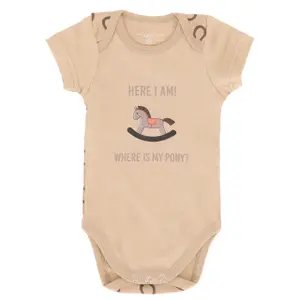


Baby bodysuits from the French Days are the foundation of your baby’s wardrobe for the first few months: packs of long-sleeved bodysuits from Name it, wrap-over bodysuits from Trois Kilos Sept featuring Sophie la Girafe, cotton styles from Guess, and Futura bodysuits from Nike or Hummel. Choose the opening, sleeves and fabric to suit your baby’s age and the temperature.
The first layer, the one that touches their skin.
Wrap-over or American-style baby bodysuits: choosing by age
A wrap-over bodysuit, also known as a kimono bodysuit, opens fully at the front with poppers on the side: you can lay your baby on it without having to pull anything over their head. It’s the most practical style while a newborn still needs support for their head and neck, like the long-sleeved wrap-over bodysuit from Trois Kilos Sept.
An American-style bodysuit has overlapping shoulders: the neckline stretches to fit over your baby’s head, and if their nappy leaks, you can take it off by pulling it down over their feet. It becomes the most common style once your baby can hold their head up, during the first few months.
Other baby clothes
To complete your baby’s outfits, the Trousers and dungarees page has elasticated-waist bottoms to wear over a bodysuit, while the T-shirts and sweatshirts page has tops to layer up when it’s cooler. For bedtime, sleeping bags go over a bodysuit and replace blankets.
What size bodysuit for a newborn and beyond?
Choose a bodysuit based on your baby’s height rather than their age. The most common guidelines are 50 cm for newborn size, 54 cm for one month, 60 cm for three months, 67 cm for six months and 74 cm for 12 months. As every baby grows at their own pace, a two-month-old may already be wearing three-month size.
The poppers at the crotch are a good guide: if they pull or come undone when your baby moves their legs, the bodysuit has become too short, even if the rest still seems to fit. For newborn size, buy just a few, as they’re often only worn for a few weeks.
Baby bodysuit cotton, labels and care
As it’s worn directly against the skin, a bodysuit is best made from soft, breathable cotton and ideally certified OEKO-TEX Standard 100. Class I, the most stringent, covers products intended for babies up to three years old. Short sleeves are useful in summer or for layering, while long sleeves are best once the temperature drops.
Wash new bodysuits before first use, at around 40 degrees, with a gentle detergent and no fabric softener. Fasten the poppers before washing so they don’t catch on other clothes, and dry flat or on a hanger: a tumble dryer set too hot can shrink cotton.
Baby bodysuits: when to stock up
Long-sleeved bodysuits are often bought during Black Friday and the festive season, when winter sets in; the winter sales are a good time to plan ahead for the next size. In spring, the French Days bring short sleeves back, and the summer sales extend the season through to the start of nursery. Special offers and clearance regularly feature multipacks of bodysuits.
Frequently asked questions
Why put a bodysuit on a baby?
A bodysuit stays in place when your baby moves, doesn’t ride up over their tummy and keeps their back and tummy button warm. The poppers at the crotch let you change their nappy without taking all their clothes off, making it an ideal first layer under all their clothes.
How many bodysuits should you get in each size?
Six to eight bodysuits in each size should cover most needs, allowing for frequent changes and spit-ups. Adjust the mix to the season: mostly long sleeves in winter and more short sleeves in summer.
Until what age do children wear bodysuits?
Many children wear them until they’re potty trained, at around two or three years old, as a bodysuit keeps their back covered under their clothes. Bodysuits are also available in larger sizes, which are useful for children who still wear a nappy at night.
How do you get a milk stain out of a bodysuit?
Rinse the stain in cold water as soon as possible, as heat sets milk proteins. Then rub with a stain-removal soap or a little Marseille soap, leave it to work and wash as usual; sunlight can also help fade marks on white cotton.
Are baby bodysuits on offer during the French Days?
Bodysuits from brands taking part in the event are available at reduced prices, both individually and in multipacks. It’s a chance to stock up on sizes for the coming months in one order, while keeping your child’s height in mind.











