
Baby bodysuits, from newborn crossover styles to long sleeves


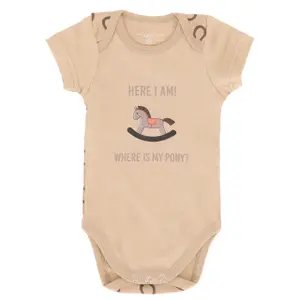


A staple for the first few months, the baby bodysuit fastens with poppers under the nappy and never rides up over the tummy. For starting nursery or going to a childminder, this selection brings together the wrap-over bodysuit Trois Kilos Sept decorated with Sophie the Giraffe, multipacks of Name it long-sleeved bodysuits, and styles from Hummel, Guess or Nike Futura.
Poppers in the right places mean quicker changes.
What size baby bodysuit to choose by age
Bodysuits are labelled in months and centimetres, with the latter referring to the child's length. A common guide is size 50 at birth, 56 at around one month, 62 at around three months, 68 at around six months and 74 at around one year. However, size charts vary from one brand to another: your baby's actual length is a more reliable guide than their age.
If your baby is between sizes, choose the larger one, as a bodysuit that's too short pulls at the shoulders and feels tight around the crotch once the nappy fills up. Newborn size often only lasts a few weeks, while a 12-month bodysuit will see your child through to their first steps.
What to wear with a bodysuit at nursery
At nursery, the bodysuit is the first layer, with the rest of the outfit worn over it. Baby T-shirts add a patterned top without adding too much bulk, while baby trousers with an elasticated waist give easy access to the poppers at nappy-change time. Dungarees make a complete one-piece outfit, and baby jackets keep the cold out on the morning journey.
Wrap-over, envelope neck, long sleeves: bodysuit styles
A wrap-over bodysuit, also called a kimono bodysuit, opens fully at the front like a little jacket: you can put it on without pulling it over your baby's head. This is a real relief in the first few weeks, when a newborn can't yet hold their head up. The Trois Kilos Sept style featuring Sophie the Giraffe, first made in 1961, is a good example.
Once your baby can hold their head up, an envelope neck, which crosses over at the shoulders, stretches to fit over their head and even lets you take the bodysuit off downwards after a nappy leak. Long sleeves, like the Name it Trine or Hummel Calen styles, work as a first layer in autumn, before short sleeves take over in warmer weather.
Cotton and washing: keeping a bodysuit soft for longer
Worn next to the skin from morning to night, a bodysuit should be chosen first and foremost for its fabric. Cotton, in jersey or interlock, stays soft, absorbs sweat and stands up to frequent washing. The OEKO-TEX Standard 100 label in class I, the strictest class, applies to items for babies up to three years old: every component is tested, including the poppers, as is how well the dyes hold up when they come into contact with the mouth.
Wash new bodysuits before wearing them, using fragrance-free detergent, with the poppers fastened so they don't catch on the rest of the washing. Tumble-drying can shrink cotton: if in doubt, dry the bodysuit flat and allow some room for growth.
When to buy more bodysuits during the year
Babies change size several times in their first year, so bodysuits are often bought in multipacks, and the calendar can help you plan ahead for the next size. Black Friday kicks off the season, followed by the festive period, when a pack of bodysuits makes a much-appreciated new-baby gift, and then the winter sales. The spring French Days and summer sales come before the start of nursery. All year round, special offers and clearance bring together end-of-line items, while new arrivals showcase the latest prints.
Frequently asked questions
How many bodysuits should you get for a newborn?
Allow for seven to ten bodysuits in each size during the first few months, as nappy changes and spit-ups often mean two or three outfit changes a day. Buy fewer in newborn size, which is quickly outgrown, and more in sizes 1 and 3 months.
Should a baby wear a bodysuit under their sleepsuit at night?
Usually, yes: a bodysuit works as a first layer under a sleepsuit or sleeping bag, especially in winter. Choose the sleeve length to suit the room temperature, ideally between 18 and 20 degrees.
Until what age do children wear bodysuits?
Many children wear them until they are out of nappies, at around two or three years old, as a bodysuit stops their top riding up over their tummy. After that, a regular vest takes its place.
How can you stop a bodysuit's poppers from getting damaged?
Always fasten the poppers before washing, and don't pull on the fabric to undo them: pinch the popper itself between two fingers. A popper that comes off easily often means the fabric around the rivet is too thin.
Why do babies wear bodysuits instead of just a top?
Fastened under the nappy, a bodysuit keeps your baby's back and tummy covered when they're wriggling, crawling or being carried. It also keeps the nappy in place and stops draughts getting in around the waist, which a top on its own can't do.











