
Bedroom and home safety

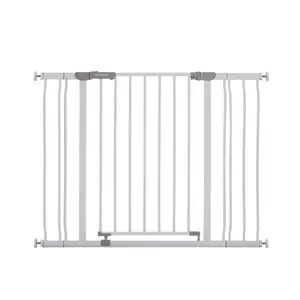
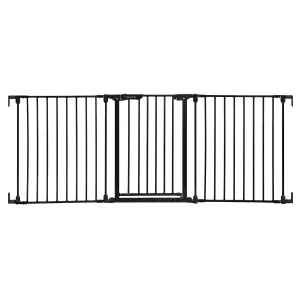
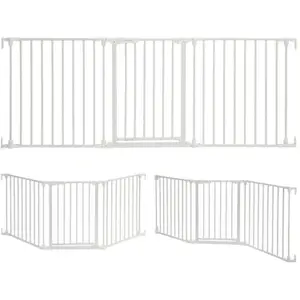
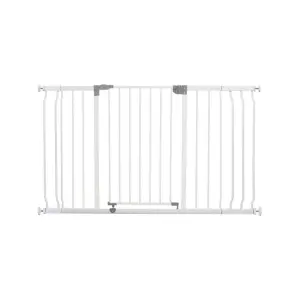


As soon as your baby starts crawling, the house takes on a new look: stairs, kitchen doors and the edges of the big bed become areas to protect. Baby safety equipment includes safety gates for doors and stairs, such as those from Dreambaby, Chicco or Webaby, bed rails and monitors to keep watch at night.
Keep them safe without stopping them from exploring.
Making your home safe as your child learns new skills
Your needs change as your child becomes more mobile. At around six or eight months, when your baby starts to crawl, block off access to the first steps and the kitchen. Between nine and twelve months, they pull themselves up by holding on to furniture: now is the time to check that it is securely fixed to the wall and to fit a safety gate at the top of the stairs. At around two or three years, the move to a toddler bed calls for a bed guard to keep them safe on restless nights.
Crawl around your home at your child's height: this will help you spot hidden dangers, such as a bare step or an unstable piece of furniture.
Bed guards and safety gates
This selection includes two types of equipment. Bed guards fit along the mattress to prevent night-time falls when your child moves out of their cot. They come in fixed, fold-down and travel versions. Safety gates block off stairs, doorways and hallways. They can be pressure-fit or screwed in place, with extensions and adaptors for wider openings or stair rails.
Stair gates: the EN 1930 standard
Safety gates designed for children are covered by the European EN 1930 standard, which applies to children up to twenty-four months and checks the height, spacing between bars, resistance to pushing and reliability of the locking mechanism. Look for this information on the packaging or in the instructions.
At the top of the stairs, only a gate fixed with screws provides a secure fit. Pressure-fit gates, which require no drilling, are suitable at the bottom of steps and between rooms. For example, the Ava gate from Dreambaby is pressure-fit and closes behind the adult by itself, while Webaby's ultra-wide gate blocks off the widest openings.
Smoke alarms and night-time safety
Since 8 March 2015, every home in France has been required to have at least one stand-alone smoke alarm that meets the NF EN 14604 standard. Fit it on the ceiling in the hallway leading to the bedrooms, as a fire at night can catch the whole family asleep. Test it every month by pressing the button and replace the battery as soon as it beeps to warn you.
In the bedroom, keep the bed away from curtains, blind cords and plug sockets, and choose wire-free or rechargeable night-time devices so there are no cables within reach.
Making your home safe at key times of year
Safety measures should be in place before your baby starts moving around. The Black Friday bedroom and the festive season, when family and young children come to visit, are good times to fit a stair gate. The winter sales, followed by the French Days in spring and the summer sales, can help you prepare for the next stages, right up to the start of the school year and the move to a toddler bed. New products appear in bedroom new arrivals, while end-of-line products can be found in the bedroom clearance.
Frequently asked questions
When should I fit a stair gate?
Before your baby starts moving around on their own, so at around six months, allowing them to get used to the gate as they grow rather than encountering it suddenly. Remove it at around two years, or as soon as they can climb over or open it, as it could then increase the risk of a fall.
Can I fit a safety gate without drilling?
Yes, with a pressure-fit model that locks between two walls or posts using adjustable tension screws. It is suitable for doorways and the bottom of stairs. Check it regularly, as repeated opening and closing can loosen it.
How many smoke alarms should I have in a home with children?
The law requires at least one per home, but having one on each floor, in the hallway outside the bedrooms, gives you an earlier warning. In a multi-storey home, interconnected models all sound together as soon as one detects smoke.
Will a safety gate also keep pets in or out?
It can keep a dog or cat in one room and stop them waking the baby, which is a useful extra benefit. For a small animal, check the spacing between the bars; for a large dog, check the height of the gate.
What should I do when my child learns to open the gate?
Some children work out the mechanism at around two years. At this point, choose a locking mechanism that requires two actions at the same time, or remove the gate if your child can now manage the stairs while holding the handrail.











