
Bed rails for children
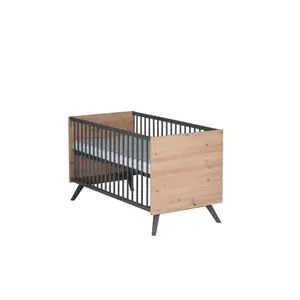
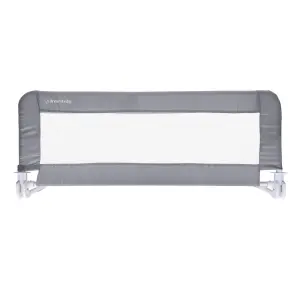
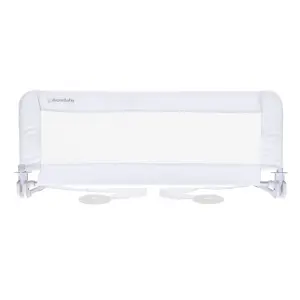
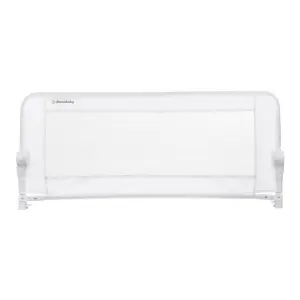
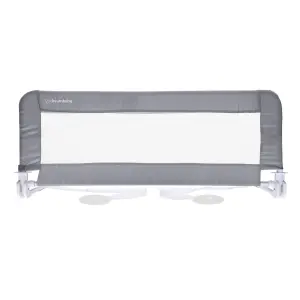
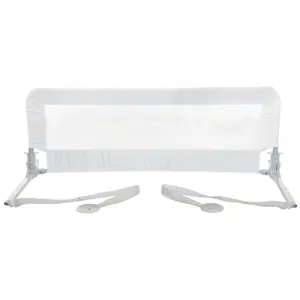
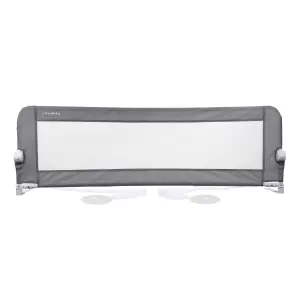
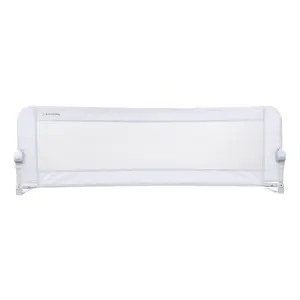
When your child moves on from their cot, the edge of the mattress becomes the first risk at night. A children's bed guard fits along one side, or both, to keep them from rolling out while they sleep, while still letting them climb down on their own at the open end. A fold-down guard can be lowered to make the bed or read a story.
No more falls from the big bed at night.
At what age should you install a bed guard?
A bed guard helps with the move to a big bed, usually between the ages of two and three, or earlier if your child is already climbing over the sides of their cot. Manufacturers advise against using one before 18 months: babies should sleep in a cot, whose enclosed space is designed for them. It remains useful until your child is four or five, as long as they move around a lot at night or are sleeping in an unfamiliar bed.
Only use one if your child can get in and out of bed on their own: they must be able to leave through the open end to go to the toilet or come to you.
Safety gates and home safety
A bed guard protects your child at night; during the day, safety gates keep them away from stairs and kitchen doors, and can be pressure-mounted or screwed in place, depending on where they’re used. You’ll find all home safety equipment, including gates, extensions and smoke detectors, in the safety category.
Fixing under the mattress or to the bed frame
Most bed guards are fixed under the mattress: a plate or tubes slide between the mattress and bed base, held in place by straps that go around the bed. The weight of the mattress and child keeps the guard in place. Other models are screwed or clamped directly to the bed frame, a sturdier option for wooden beds.
In both cases, the guard must sit flush against the mattress, with no gaps where your child could get their head or body stuck. Follow the instructions for the gap between the guard and headboard, and check the straps are tight every time you change the sheets.
Fold-down, fixed or travel: the different models
- The fold-down bed guard pivots down in one easy movement: lower it to tuck your child in or change the sheets, then raise it for the night.
- A fixed guard, often made of wood, stays in place and suits beds pushed against a wall, with only one exposed side.
- The travel bed guard is lightweight and folds into its carry bag, so you can take it when your child stays with their grandparents, goes on holiday or stays in a hotel.
- For a bed in the middle of the room, a double guard protects both sides at once.
A breathable mesh panel lets air through if your child presses their face against the guard, while a metal frame keeps the whole thing lightweight.
Getting ready for the move to a big bed
The move to a big bed often comes at a turning point: the arrival of a new baby, starting school or moving house. Black Friday bedroom deals and the festive season, with family visits, are a good time to get a travel bed guard; the winter sales, spring French Days and summer sales give you time to prepare for the change, which many families plan before the start of the school year. Find recent models in the new in bedroom section, and end-of-line deals in the bedroom clearance section.
Frequently asked questions
Is a bed guard suitable for a bunk bed?
No. Bunk beds and mezzanine beds have their own built-in guards, as required by the EN 747 standard. In France, raised beds are not suitable for children under six, and a removable bed guard is not a substitute for these safety features.
How do you fold a bed guard?
Most fold down by releasing two buttons or levers at the bottom of the uprights, then lowering the panel. To pack it away fully, loosen the straps and remove the tubes from under the mattress: the guard will then lie flat in its bag.
What length of bed guard should I choose for a child’s bed?
Bed guards come in several lengths. They should cover the area where your child sleeps, from their head to their knees, without reaching the end they use to get out. The longest option is not necessarily the best, as you need to leave a clear exit at the foot of the bed.
Is a bed guard suitable for a double bed?
Yes, many models fit wider mattresses, helping to keep your child safe when they stay with their grandparents or share a double bed on holiday. Check the maximum mattress thickness in the instructions: if it’s too thick, it will reduce the usable height of the guard.
Does a bed guard stop a child from getting out of bed?
No, that’s not what it’s for: it keeps a sleeping child who rolls towards the edge from falling out, but doesn’t stop them getting up. If your child starts climbing over it instead of leaving through the open end, it’s best to remove it or choose a taller one.













