
Boys’ shoes on sale
A boy outgrows his shoes faster than he wears out the soles: the sales help keep up. This selection of reduced-price boys' shoes brings together Gel-1130 trainers from Asics, Viper and Hawk styles from Gola, thick-soled Skechers, Pampa boots from Palladium, Reima winter boots and Victoria sandals with touch-fastening straps.
From the school playground to the beach.
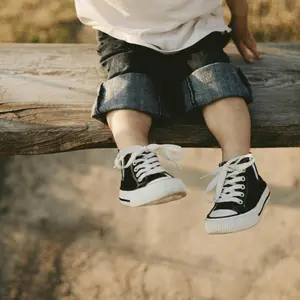
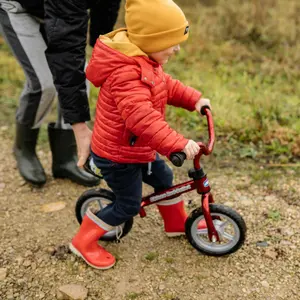
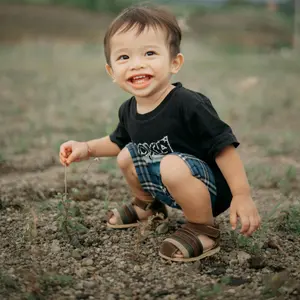
Measure your son’s feet before ordering
Measure at the end of the day, when his feet are slightly swollen. Have your son stand with his heel against a wall, on a sheet of paper where you mark the tip of his big toe. Go by the longer foot, then add about a centimetre of room so his toes can move freely. French shoe sizes are measured in Paris points, with each size equivalent to two thirds of a centimetre. Growth slows with age: between two and five years old, expect to need a new size every four to six months, then less often during primary school, before speeding up again when he starts secondary school.
Sale shoes for boys, by type
For school and sport, boys’ trainers in the sale include running, retro and canvas styles. When the weather turns bad, boys’ boots and ankle boots are ideal for rain, snow and trips to the woods. In warmer weather, boys’ sandals and flip-flops take over, while other shoes for boys include slides, boat shoes, espadrilles and water shoes.
A pair for every occasion: school, rain and summer
For school, trainers are the go-to choice: Asics, founded in Kobe in 1949, uses Gel cushioning in the heels of its children’s styles, while Skechers, a Californian brand that first appeared in 1992, goes for generously cushioned soles. For rain and cold weather, Palladium ankle boots have their roots in a company founded in 1920 to make aircraft tyres, and their 1947 Pampa style still has its treaded sole. In warmer weather, the Victoria canvas sandal with its hook-and-loop fastening features the brand’s signature dyed canvas. Finally, Gola, founded in Leicester in 1905, brings retro styles to the playground.
Hook-and-loop fastenings, laces or elastic, depending on age
The fastening matters just as much as the sole. For nursery school, hook-and-loop fastenings are the obvious choice: children can put their shoes on by themselves in seconds, and teachers don’t have to tie laces for a whole class. The Gola Viper Glimmer Strap is one example. Children usually learn to tie laces between the ages of five and seven, and they provide a more secure fit for running. Elastic laces offer a halfway option: the shoe slips on like a slipper but still looks like a lace-up trainer. At Asics, PS and GS refer to Pre-School sizes for younger children and Grade School sizes for older primary school pupils.
Getting your son ready for key times of the year
Shopping events can help you plan between sizes. Black Friday comes at just the right time for winter ankle boots and boots, while the festive season is a good time to give a pair of trainers. The winter sales are a chance to replace a pair that’s become too small halfway through the year. The spring French Days are a good time to buy sandals, followed by the summer sales and back-to-school shopping for school trainers. The rest of the year, great deals bring together end-of-line styles from big-name brands.
Frequently asked questions
How many pairs of shoes does a boy need in a year?
Two pairs of trainers to alternate, so each pair can dry overnight, a pair of boots or ankle boots for rainy days, and sandals for summer cover the essentials. He’ll also need shoes for sports club.
Can I buy a size up during the sales?
Half a size bigger works well for a snug-fitting trainer. Any more than that and his foot will slide around, his heel will rub and he may trip. It’s better to buy the next size up a few months later.
How do I dry shoes soaked by the rain?
Take out the insoles, stuff the shoes with newspaper and leave them to dry at room temperature. Radiators and tumble dryers can harden the leather and cause the soles to come unstuck.
Are second-hand shoes not recommended for children?
A worn shoe has moulded to its first owner’s foot, and the sole has worn down to match their way of walking. For shoes worn every day, podiatrists recommend buying new, especially for younger children.
How can I tell if a pair has become too small?
Press down at the toe: there should be about a finger’s width between the longest toe and the end of the shoe. Redness on the toes or heel in the evening, or a child taking their shoes off as soon as they get home, are signs to take seriously.













