
Building toys for building, stacking and creating


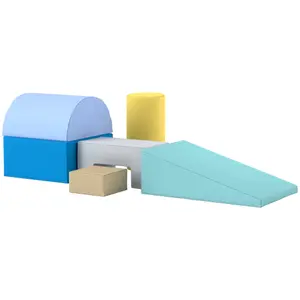
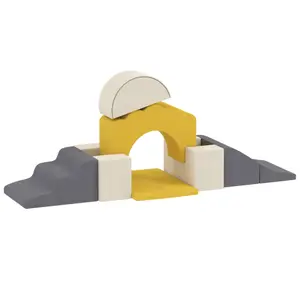
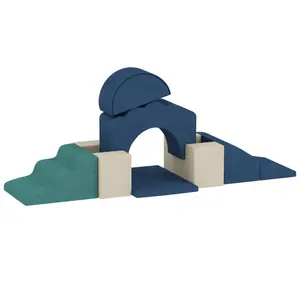
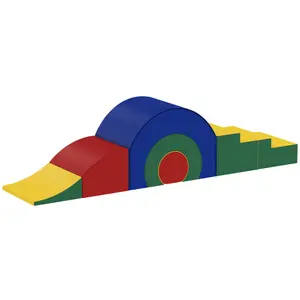

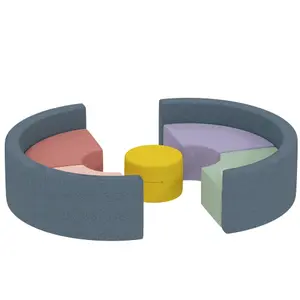
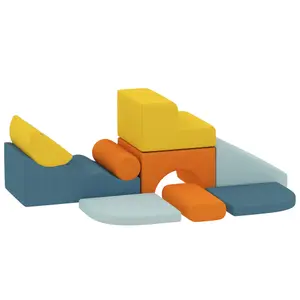
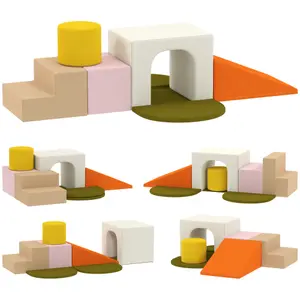


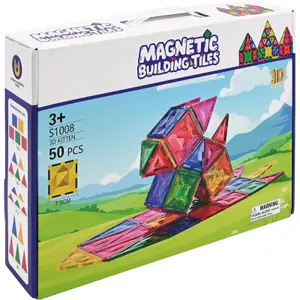
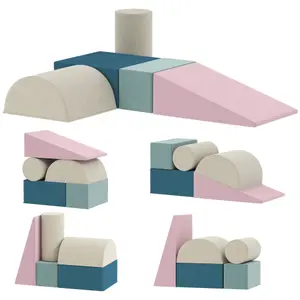
Building sets accompany children from their first two-block tower to the articulated arm they build on their own at around eight years old. Stacking, balancing, slotting pieces together, then following a plan: each step develops fine motor skills, spatial awareness and perseverance, and leaves them with a real object they can be proud of.
From the first tower to the first mechanism.
Which construction toy for each age
Before the age of three, large blocks made of wood or foam are the main choice: children stack them, knock them down, start again and discover the idea of balance. The EN 71 standard bans small detachable parts from toys intended for children under 36 months, which is why these pieces are large and impossible to swallow. Between the ages of three and six, children move on to interlocking bricks, blocks in different shapes and their first models to copy.
From the age of six or seven, children can follow illustrated instructions step by step and take an interest in mechanical kits: gears, pulleys and hydraulic cylinders. Around the age of ten, more complex models and engineering challenges take over.
Lego and Playmobil, two worlds of their own
Two big names have their own pages. The Lego page brings together Danish interlocking bricks, from large pieces for toddlers to technical models for older children, while the Playmobil page features German figures and the scenes they build, with knights, firefighters and farm animals.
Natural wood, foam or plastic: the materials on offer
- The Wooden Story blocks come from a family workshop in the Beskids, Poland. They are made from FSC-certified wood and finished with vegetable oil and beeswax. The large rainbow block board, bag of one hundred natural blocks and round stacking pyramid are inspired by Montessori teaching methods.
- Stapelstein stones, made from expanded polypropylene foam, can be stacked into towers, used to make balance courses and hold the weight of an adult.
- The Kidsglobe wooden shed, designed for three tractors, can be assembled and then used as the setting for a miniature farm.
Mechanical kits and balance games for older children
After the age of six, building becomes more technical. The hydraulic robot arm and digger truck from Rex London are assembled from pre-cut pieces, then brought to life with water-filled syringes that act as cylinders. Children learn by doing how pressure is transferred through a liquid, as in construction machinery.
Giant balance games, such as Stack 'N' Fall by Grasshopper Games, turn things around: players build a tall tower of blocks, then remove the pieces one by one without knocking it over. A game of skill for several players, just as much at home in the living room as in the garden.
Construction toys: when to add to your collection
A construction toy collection grows over the years, one block at a time. Black Friday and the festive season bring plenty of Christmas gifts, the winter sales are a chance to add a block board or mechanical kit, then the spring French Days and summer sales help get ready for the long school holidays. When school starts again, the special offers page and the toys and games clearance add to the new arrivals.
Frequently asked questions
How many blocks should I get for a two-year-old?
Around twenty blocks in different sizes and shapes are enough to build towers, bridges and enclosures. It’s better to have fewer pieces that are large enough for little hands, then add to the box when they start building more elaborate structures.
How should I store construction toys in a bedroom?
Low, lidless tubs that children can reach make it easier to sort pieces by type. A mat that folds up into a bag also lets you pack away a construction in progress in seconds, without losing small pieces under the furniture.
Can wooden blocks be washed?
Wipe them with a slightly damp cloth, with a little mild soap if needed, then leave them to air dry. Never submerge them in water: the wood will swell, crack and lose its oil or wax finish.
What’s a good gift idea for an eight-year-old who loves mechanics?
An assembly kit that works once it’s finished, such as a hydraulic arm or construction vehicle, is almost always a hit at this age. It combines reading instructions and patience with the satisfaction of seeing what they’ve built move.
Are stacking stones suitable for babies?
Their lightweight foam and lack of sharp corners make them suitable from the age of one for stacking and rolling, with supervision. For climbing on them, the manufacturer recommends stacking no more than three pieces and placing them on a stable floor rather than a slippery rug.











