
Children’s belts, for school and special occasions


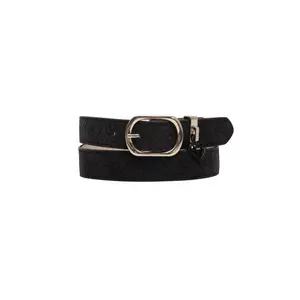
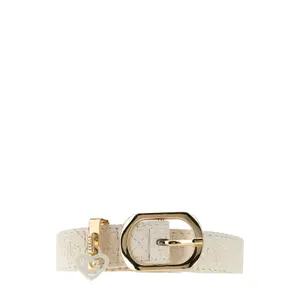


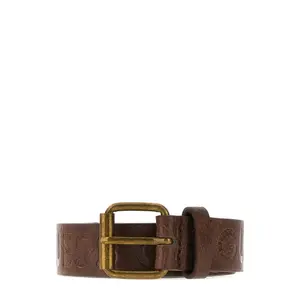
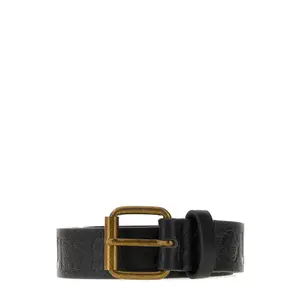
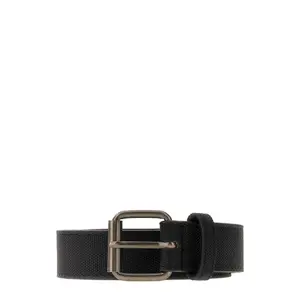
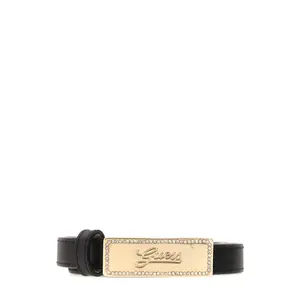


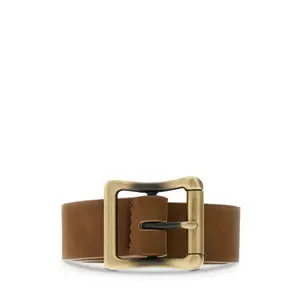
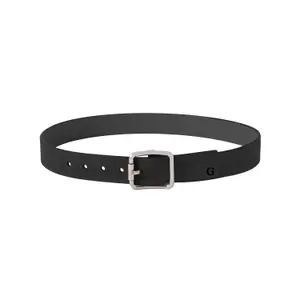
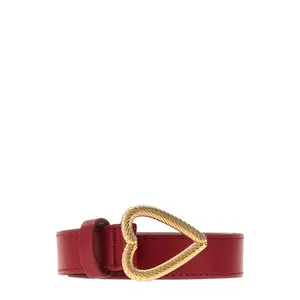


A children’s belt keeps trousers in place around a waist and hips that are still not very defined, and finishes off a party outfit. Choosing one comes down to three questions: what length fits their waist, which fastening they can manage on their own, and what style suits the occasion, from a braided everyday belt to a designer belt.
The right length, the right fastening
Measuring a child's belt size
A belt size is based on the child's waist measurement, taken with a tape measure where it will be worn, just above the hips. Don't pull the tape tight; you should be able to fit a finger underneath. If you're measuring a belt that already fits, lay it flat and measure from the pin of the buckle to the hole being used: this is the useful length that matters, not the full length of the strap.
Choose a belt whose centre hole matches the measurement. The holes on either side leave room for a tucked-in jumper, thicker trousers or a few centimetres of growth. A belt that's too long leaves a loose end sticking out of the loop, which will eventually twist.
Socks, ties and hats: accessories to match
A belt rarely works on its own. For a special occasion outfit, match children's ties to its colour, and matching socks complete the look down to the feet. Hats, caps and beanies finish off the outfit, while fancy jewellery and sunglasses add the finishing touch to summer outfits.
Prong, hook-and-loop or elastic: choosing a fastening by age
At nursery age, it's not about style but independence: children need to be able to undo their belt quickly on their own when they need the toilet. Hook-and-loop or simple buckle fastenings, and elastic belts that pull on without needing to be undone, are suitable at this age. The elastic braided belt has another advantage: the prong can be fastened anywhere in the braid, without relying on pre-punched holes.
At primary school, the classic prong buckle becomes easier to use, especially as children will have seen it done countless times. At secondary school, it's time for leather or canvas belts closer to adult styles, with a more prominent buckle that's part of the look.
Sofie Schnoor and Guess: a belt to finish off an outfit
Some belts are chosen as much for their look as for keeping trousers in place. Danish designer Sofie Schnoor launched her brand in 2001 with shoes, followed by a children's line in 2007; her CARLIESY children's belt is an extension of her expertise in accessories. Guess, founded in 1981 by the Marciano brothers, also offers a girls' belt in keeping with its adult collections.
For a special occasion, match the belt colour to the shoes, and choose a discreet buckle if the outfit already has a pattern. With jeans, a canvas or braided belt in a bright colour adds a cheerful touch without making the outfit look heavy.
Back to school and special occasions: when to buy a child's belt
Belts are often bought at two times of year: before a special occasion and before the start of the school year. Black Friday and the festive season are a good time to buy one for a New Year's Eve party or a winter wedding, while the winter sales are a chance to replace one that's become too short. The spring French Days come just before the communion and wedding season, followed by the summer sales and back-to-school shopping. Check clothing and accessories in the outlet section, the great deals page and the new arrivals between these dates.
Frequently asked questions
At what age can a child wear a belt?
As soon as they wear trousers with a fixed waistband, often around the age of three or four, as long as they can undo it on their own. Before then, the elastic waistbands on toddlers' trousers are enough, and a belt would only make trips to the toilet more difficult.
How can you teach a child to fasten a belt?
Start with the belt on their lap, then practise in front of a mirror: thread the end through the buckle, fasten the prong and tuck the end into the loop. A few tries in the evening are enough to help your child feel confident before fastening it on their own at school.
What should you do if a belt is too long?
A cobbler can punch an extra hole in a leather belt or shorten the strap at the buckle end. For a canvas belt, a hole punch is often enough, without damaging the buckle or stitching.
Is a belt it useful with trousers that have an adjustable waist?
The elastic buttonholes inside the waistband are usually enough to adjust the fit of children's trousers. A belt is useful for the look, or when hand-me-down trousers are still too loose even after adjustment.
How do you care for a child's leather belt?
Wipe it with a damp cloth after a muddy outing and leave it to dry away from a source of heat. Then condition the leather with a little colourless cream two or three times a year. Never put it in the washing machine, as this can crack the leather and tarnish the buckle.











