
Mattresses for babies and children, pillows suited to every age
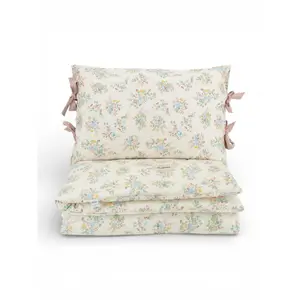
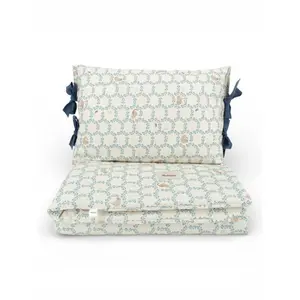
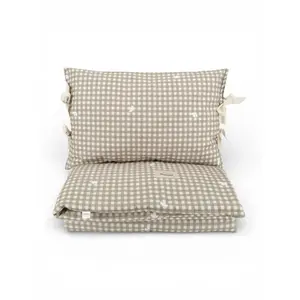
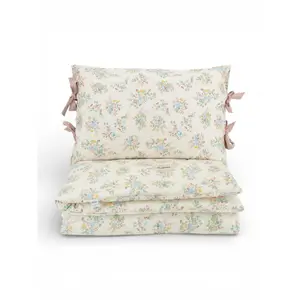
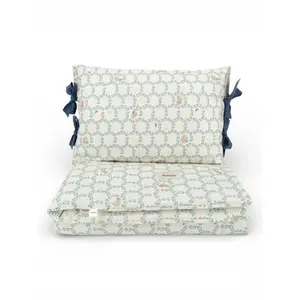
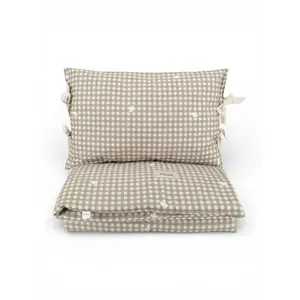
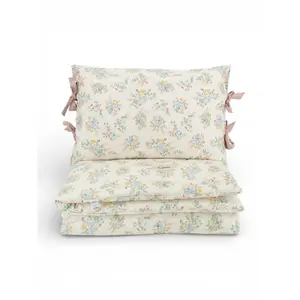
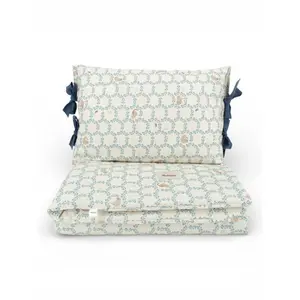
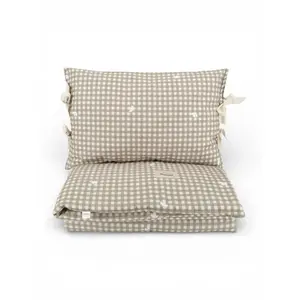
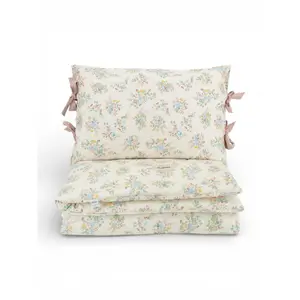
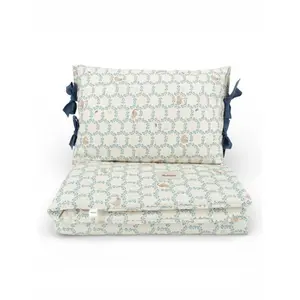
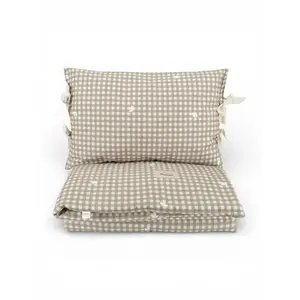
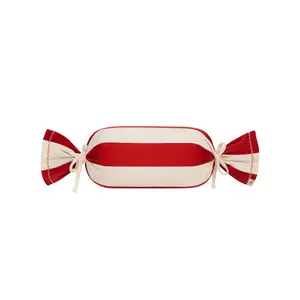
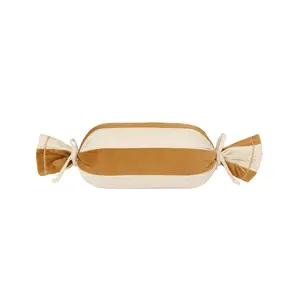
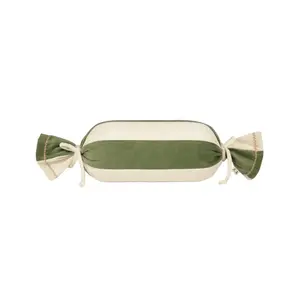


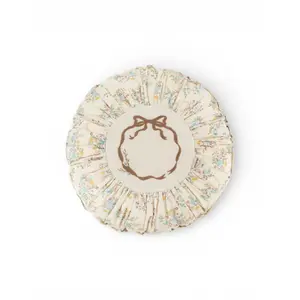
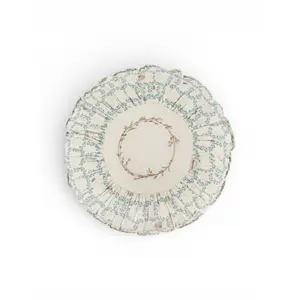
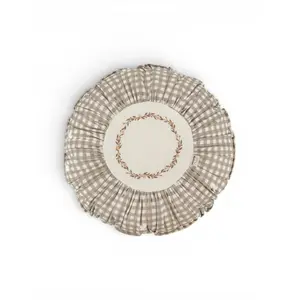

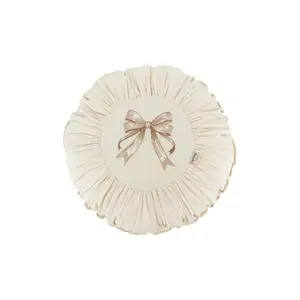
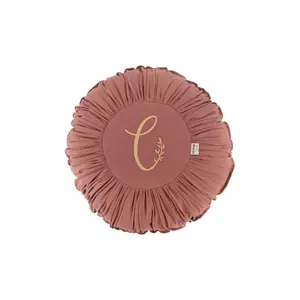
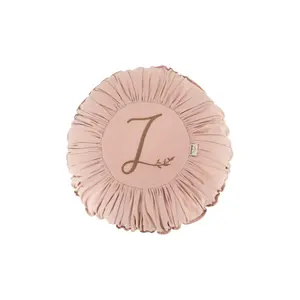
A good night’s sleep starts with a firm children’s mattress in exactly the right size for the bed: 60 x 120 or 70 x 140 cm for a cot, 90 x 190 cm for a child’s bed, or a smaller size for a cradle. A pillow is only introduced after the age of two, and should be very flat, like the velvet designs from Moi Mili. Before then, babies sleep with their heads directly on the fitted sheet, without a pillow.
The right support, night after night.
What firmness should a baby mattress have?
A baby should sleep on a firm mattress that does not dip under their weight: press your palm into the centre; the indentation should disappear straight away. A mattress that is too soft, such as memory foam, may mould around a baby’s face if they roll over. The EN 16890 standard, which applies to mattresses for cots, cradles and travel cots, also includes a test that simulates a head sinking into the mattress.
For older children, the mattress can be slightly softer to support the spine, with a softer feel on the surface but firm support underneath, so the hips do not sink in.
Cots, sheets and bed rails to match the mattress
The mattress depends on the bed it goes in. Baby and children’s beds list their internal dimensions, while co-sleeping cots and travel cots use specific sizes that are smaller or thinner. Once you have chosen a mattress, bedding includes fitted sheets with a pocket depth to suit its thickness, while bed rails and accessories fit underneath to stop a child falling out when they move into a bigger bed.
Foam, latex or coconut: mattress materials
- High-density polyurethane foam is lightweight and affordable, and is used in most cot mattresses; its density helps stop it from sagging too quickly.
- Latex, whether natural or synthetic, offers lasting springiness and good ventilation, which are useful for older children.
- Coconut fibre, often combined with latex, provides firm support and lets air through.
- The cover, which can be removed and machine-washed and sometimes has a cooler side for summer, matters just as much as the core: little ones often have accidents at night.
When to give your child a pillow
Under the age of two, do not put a pillow or cushion in the bed: babies should sleep flat on their backs, and a bulky item near their face could stop them from moving their head. Between the ages of two and three, when a child moves into a junior bed and their shoulders get broader, you can introduce a very flat pillow, a few centimetres thick and in a small size such as 40 x 60 cm, if they seem to need one.
Choose washable filling, either synthetic or natural fibre, and a soft cover; the velvet on Moi Mili pillows adds a decorative touch to the bed of an older child. A pillow that is too thick puts strain on the neck, and should be replaced as your child grows.
Replacing mattresses and pillows at key times of year
Replace a mattress for each new child and every time you change beds, so you have time to look out for offers. Black Friday bedroom kicks off the calendar, followed by the festive season and the winter sales. The spring French Days, summer sales and the start of the school year often coincide with a move to a junior bed or a 90 x 190 cm bed. New models are added to the new bedroom arrivals, while end-of-line items go in the bedroom clearance.
Frequently asked questions
What thickness should I choose for a cot mattress?
About ten centimetres is usually enough for a cot; check the internal height given by the manufacturer. A mattress that is too thick reduces the usable height of the sides and makes it easier for a child to climb out.
Do I need a mattress protector under the fitted sheet?
Yes, a waterproof, breathable mattress protector protects the mattress from nappy leaks and spit-up, which can cause lasting damage. Have two so you can wash one while using the other, and make sure they match the mattress dimensions exactly to avoid creases.
How long does a child’s mattress last?
A cot mattress is used for as long as the child sleeps in a cot, usually two to three years, then should be replaced before another child uses it. A good-quality children’s bed mattress lasts for several years; turn it over regularly if it is reversible, to spread the wear evenly.
Does a new mattress need airing?
Take it out of its packaging a few days before the first night and air the room well so the manufacturing smell can fade. After that, air the bedroom every day and remove the sheet regularly to let the core breathe.
How do I wash a child’s pillow?
Most synthetic pillows can be machine-washed at 40 or 60°C on a gentle spin, then dried flat or tumble-dried on a low heat. Wash velvet covers inside out on a delicate cycle, following the care label.











