
Slippers for babies and children, from nursery to home


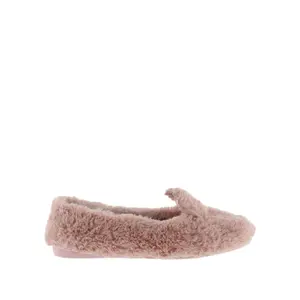
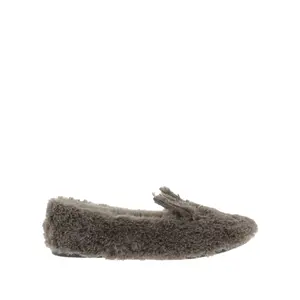





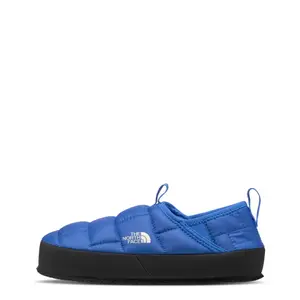


Children’s slippers protect little feet from cold tiled floors, support their first steps and go with your child to nursery or preschool. Soft leather that moulds to a baby’s foot, felted wool that keeps them warm, knitted slippers with non-slip grips or slippers with a hook-and-loop fastening: each material suits a different age and use, and choosing the right pair depends just as much on the sole as on the fastening.
Warm and slip-free, from morning till bedtime.
Which slippers to choose for your child's age
Before they start walking, babies mainly need to keep their feet warm without feeling restricted: soft leather or fabric slippers, held in place with elastic around the ankle, stay on even when they kick their legs in their cot. Once they start pulling themselves up and then walking, the sole should stay thin and flexible so they can feel the ground and develop their balance.
At around two or three, children become more active and spend their days on the move. A rubber sole or non-slip grips become useful on polished wooden floors and tiles, while a hook-and-loop fastening lets them put their slippers on by themselves. After that, more structured slippers with a shaped footbed take over for older children.
Slippers by brand and other shoes
Each brand has its speciality. The Robeez page brings together soft leather-soled slippers designed for toddlers, Victoria slippers Victoria offer hook-and-loop textile styles with the brand's Spanish style, and the Hummel selection features warm slippers in the colours of Danish sport. For going out, the baby shoes page brings together first-walker styles for wearing outdoors.
Leather, felted wool or knit: how the material makes a difference
- Soft leather, like that used for Les Pas Petits slippers, a French brand founded in 2020, moulds to the foot, stands up to crawling and feels close to being barefoot.
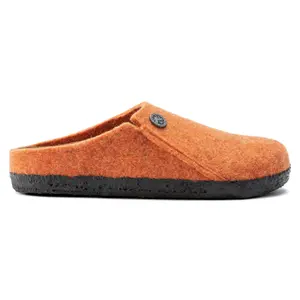
- The felted wool of Birkenstock Zermatt slippers, made in Germany, keeps feet warm while letting them breathe, and rests on a cork and latex footbed.
- The wool knit of the Falke Cosyshoe slipper feels like a thick sock, with silicone grips under the felt sole and a machine-washable wool programme.
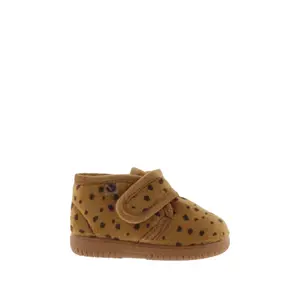
- The hook-and-loop textile of Victoria and Cienta slippers, mounted on rubber, slips on in one easy movement.
Slippers for nursery and pre-school
Most nurseries and pre-schools ask children to keep a pair of slippers there. The number one priority is independence: a wide hook-and-loop fastening or a slipper they can slip on unaided means they don't have to wait for an adult after nap time. The second is safety: a non-slip sole helps prevent slips in the activity room and corridors.
Write your child's name inside, as all the pairs look alike in the cloakroom. Finally, choose a material that can handle regular washing, or keep a second pair at home: school slippers rarely come back clean at the end of term.
Children's slippers: when to replace a pair
Slippers need replacing as your child's feet grow, often twice a year when they're little. Black Friday comes around when it's time to get the warm slippers out again, and slippers made from wool are always a welcome gift over the festive season. The winter sales are a good time to buy the next size up, the spring French Days and summer sales bring more shoes into the shoe clearance, and the start of the school year is the time to get a pair ready for nursery or school, picked from the special offers.
Frequently asked questions
Which sole is best for a two-year-old who runs everywhere?
At two, choose a slipper with a soft but non-slip sole that lets the foot bend naturally. A hook-and-loop fastening or elastic around the ankle helps stop your child losing a slipper while running, and a high back that covers the heel helps keep their steps steady.
Should I buy slippers a size bigger?
Not necessarily. Slippers that are too big can make your child trip and are easy to lose. Measure your child's foot and choose the matching size, allowing a little extra room only if the material is stiff; soft leather and knit slippers are usually best worn snugly.
How do I wash wool slippers without damaging them?
Check the label: some knitted slippers can go in the washing machine on a low-temperature wool programme. For felted wool, use a brush and spot-clean with a damp sponge. In all cases, never tumble dry them or put them on a radiator.
Can a child with wide feet wear slippers?
Yes. Choose styles with hook-and-loop fastenings that open wide across the top, or slippers made from soft leather or knit that adapt to the shape of the foot. Avoid narrow, pointed-toe slippers that squeeze the toes.
Are slippers suitable for activity sessions at school?
Many pre-schools have children do movement activities in soft slippers or barefoot. A lightweight slipper that stays on securely around the ankle and has a grippy sole is ideal; check with the teacher to find out what they recommend.











