
The little doctor's kit for playing at treating people
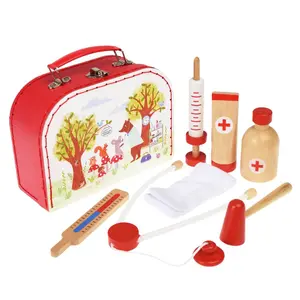
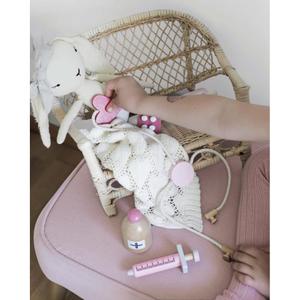
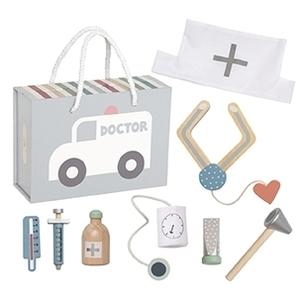
Listen to their teddy bear's heartbeat, take their doll's temperature or put a plaster on an imaginary knee: a doctor's kit is one of the great classics of pretend play. By swapping roles, children get used to the doctor's actions, express their worries and care for others, with child-sized instruments all packed in a little case.
Doctor, it's your turn to play.
Stethoscope, otoscope, syringe: what’s in the doctor’s kit?
A complete kit brings together the instruments a child sees at the paediatrician’s surgery. The stethoscope, the star of the show, lets them listen to the heart; some models really transmit the heartbeat through a diaphragm. A thermometer, an otoscope for looking inside the ears and a reflex hammer complete the consultation.
The syringe without a needle lets them play out a vaccination, often the scene they dread most. Depending on the model, the kit may also include a blood pressure monitor with a bulb, plasters, a pair of glasses, round-tipped scissors or a prescription pad. The pieces go back in the case, which the child proudly carries from one patient to the next.
Toy kitchens, dressing up, music: other pretend-play toys
The little doctor also likes trying out other jobs. Dressing-up clothes let them become a knight or an astronaut, while toy kitchens and tea sets turn the bedroom into a restaurant. Educational games help build dexterity and concentration, while musical instruments develop their ear.
Playing doctor to make medical appointments less daunting
In France, children have twenty compulsory medical check-ups between birth and the age of sixteen, including eleven in their first year: visits to the doctor are part of early childhood. Playing doctor helps them understand what happens and turn their anxiety into curiosity.
By treating their soft toy, children can act out the appointment at their own pace, become the one who reassures and put into words how they feel: the prick that stings a little, the cold stethoscope. Before an appointment or vaccination, invite them to examine their favourite toy with you, then take the kit to the surgery: a familiar comfort in an intimidating place.
Wood, plastic or fabric: a kit to suit their age
For children under three, choose large instruments with no small parts that are easy to grip, and a lightweight case they can carry by themselves. Wood is sturdy and pleasant to touch, stands up to repeated drops and can easily be passed on; check that it is well sanded and painted with finishes that comply with the EN 71 standard.
Plastic is lighter and allows for instruments that light up or make sounds. If so, the battery compartment should be secured with a screw so the child cannot open it. Soft, quiet fabric cases are a good choice for journeys and waiting rooms. From the age of four, a doctor’s coat and badge are a nice addition to the game.
Doctor’s kit: when’s the best time to buy one?
A doctor’s kit often features on Christmas lists for children aged two to five. Black Friday is a chance to get one ahead of the festive season. The winter sales, the spring French Days and the summer sales offer other opportunities, for example before starting nursery or their first year of school. Keep an eye out for special offers throughout the year.
Frequently asked questions
At what age does a child start playing doctor?
The first imitative gestures appear at around two: putting an ear against someone’s tummy or holding out an object like a thermometer. A proper consultation scenario, with a patient and a diagnosis, tends to develop between the ages of three and five.
Can you really hear a heartbeat with a toy stethoscope?
Some models, with a diaphragm and soft tubing, really do transmit heartbeats, which amazes children. Others are purely decorative or play a recorded sound: check the product description to see how it works.
How can I reassure a child who is afraid of injections?
Explain simply what is going to happen, without promising it won’t hurt. Acting out the scene on their soft toy with the syringe without a needle, then letting them give the injection in turn, helps them feel in control again.
Should instruments shared between children be cleaned?
Yes, especially the stethoscope and thermometer, which go from one child to another. A damp cloth with a little soap is enough for plastic; wipe wood without soaking it and dry it straight away.
Does a doctor’s kit appeal to older children too?
At around six or seven, children become interested in the human body and enjoy more realistic instruments. A body atlas or a personalised doctor’s coat can bring the game to life again, and sometimes even spark a real career ambition.













