
Learning through play, from early learning to first challenges
Pretending to cook, stepping into the shoes of a knight, tapping a tambourine or aiming at a target: educational and learning toys turn every playtime into a learning opportunity. Imitation, motor skills, language, concentration, cooperation: each type of toy develops different skills, so choose according to your child’s age and temperament.
Play, children’s first teacher.

What each type of play helps your child develop
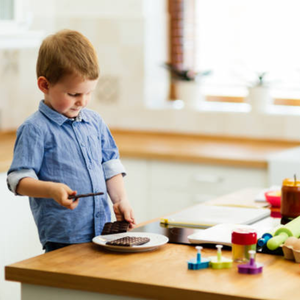
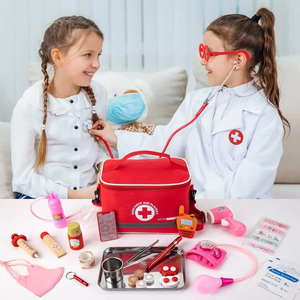
- Pretend play, such as a play kitchen, doctor's kit or dressing up, starts between eighteen-eight months and two years, when children begin to pretend. They act out everyday life, build their vocabulary and learn to put themselves in other people's shoes.
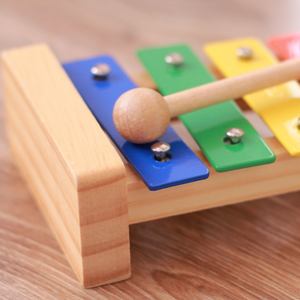
- Musical instruments develop listening skills, a sense of rhythm and coordination between both hands.
- Games of skill and outdoor games, such as throwing, aiming and catching, develop motor skills, patience and self-control.
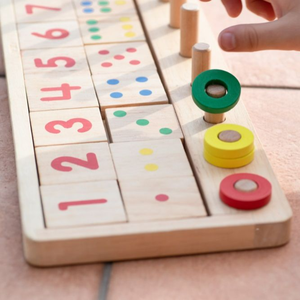
- Games with rules teach children to wait their turn, count and accept losing.
Play kitchens, dressing up, music: all our play and learning pages
For budding cooks, play kitchens and tea sets bring together miniature crockery and food to cut up. Dressing-up clothes transform your child into a knight, a fairy or an astronaut, while a doctor's kit helps them feel more at ease about visits to the doctor. Musical instruments stimulate the ear from the first months, while educational games bring together games of skill, outdoor games and make-believe.
Which play and learning games from birth to eight years
Before their first birthday, babies discover the world through their senses: they shake things, listen and put things in their mouths. A noisy rattle, a light tambourine or a wooden push-along car accompanies their first explorations. Between one and three, children walk, stack, pour and start to imitate: it's the age for tea sets and first simple dressing-up outfits, such as a cape or mask.
From three to six, role play develops, with increasingly elaborate scenarios, while games of skill take over in the garden. After six, children enjoy taking on challenges: aiming accurately in a throwing game, performing tricks with a kendama or beating their own record for bouncing.
Fabelab, Amscan, Nerf, BEX: brands that bring a different kind of play
Danish brand Fabelab, whose studio is based in Copenhagen, designs dressing-up clothes in organic cotton and soft colours: a knight's armour, dragon wings, or an outfit for a little astronaut or builder. Amscan dresses Paw Patrol fans in the colours of Chase and Marshall.
For the garden, Nerf, known since Parker Brothers launched its foam ball in the late sixties, offers the Power Howler, a bow with soft arrows for safe target practice. Swedish company BEX, founded in 1985, has made Ladder Golf a picnic classic: players throw bolas onto a three-rung ladder. The Mega Bounce XTR by Wicked, a ball with a spectacular bounce, rounds off afternoons outdoors.
Play and learning games: key times to shop
Play and learning games are often bought for Christmas or a birthday. Black Friday comes before the festive season, a popular time for play kitchens and dressing-up clothes. The winter sales, the spring French Days and then the summer sales, ideal for outdoor games, mark the rest of the year up to the start of the school year. Clearance toys and games and new toys and games round out these key shopping events.
Frequently asked questions
How many toys should you leave out for a young child?
It's better to have just a few toys at a time, neatly stored and easy to see, than an overflowing toy box. Rotate the toys every two or three weeks: when they come back after a break, they spark fresh interest and new ways to play.
What does the CE mark on a toy guarantee?
It shows that the manufacturer declares the toy complies with the European Toy Safety Directive, based on the EN 71 standard: durability, no small parts for younger children, limited flammability and restricted chemical substances.
Should you play with your child or leave them to play alone?
Both are useful. Playing together builds language skills and gives children ideas for scenarios, while free play develops independence and imagination. For younger children, the best approach is to have an adult nearby but not too involved.
Are play and learning games suitable for children who have trouble concentrating?
Yes, as long as you choose short, hands-on activities with a visible result: aiming at a target, stacking or tapping out a simple rhythm. Several short sessions are better than one long one, and it's good to praise every step of their progress.
How do you clean wooden toys?
Wipe them with a slightly damp cloth, adding a little mild soap if needed, then dry them straight away. Never submerge them in water or put them in the dishwasher: the wood will swell and split, and the paint may flake off.













