
First instruments for little musicians


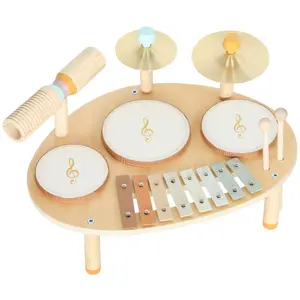


Beating a drum, shaking a tambourine, blowing into a flute: musical instruments for children are often their first encounter with sound. Long before they can read a note, little ones discover rhythm, the difference between loud and quiet, and the joy of playing with others. Each instrument is chosen to suit their age, breath control and hand size.
Rhythm, even before their first words.
Which instrument to offer at every age, from babyhood to six
From six months, babies shake anything that makes a noise: securely attached maracas and bells grab their attention. At around one, they hit a drum or a tambourine with their whole hand, two instruments that immediately show them the link between their actions and the sound. Between two and three, the xylophone encourages them to aim a stick at the bars.
Wind instruments require controlled blowing: the flute and small slide trombone are better suited to children aged three or four and up, when they can blow without sucking in. At around four or five, many conservatoires and music schools offer introductory music workshops before children start learning a proper instrument.
Fancy dress, tea sets, educational games: other learning-through-play toys
Music goes well with other learning-through-play toys. To put on a show, fancy dress costumes dress musicians up as knights or fairies. Educational games develop dexterity and concentration in other ways, while play kitchens and tea sets extend imaginative play. To help them get used to the doctor, there’s the doctor’s kit.
Percussion or wind instruments: what each one develops
Percussion instruments—drums, tambourines, maracas or claves—help develop a sense of rhythm and coordination between both hands. They are at the heart of the Orff-Schulwerk method, developed by the German composer Carl Orff, who wrote Carmina Burana: children learn music by singing, moving and improvising on simple instruments, especially xylophones and metallophones.
Wind instruments, such as the flute or trombone, help develop breathing and breath control, a valuable skill for speech and singing too. The trombone slide adds a playful element: children hear the sound go up and down as the length of the tube changes, giving them their first introduction to pitch.
Sound levels, small parts, hygiene: playing safely
- Children’s ears are sensitive: European standard EN 71-1 limits the sound level of toys, and toys that produce loud, sudden sounds carry a warning not to use them near the ears.
- For children under three, check that bells, beads and small bells are securely attached or enclosed: they are dangerous small parts if they come loose.
- Wind instruments are for individual use. Rinse the mouthpiece after each use and don’t share them between sick brothers and sisters.
- For wooden instruments, choose smooth, well-sanded surfaces and paint that meets EN 71, which children can safely put in their mouths.
Musical instruments: the best times to buy
A first instrument makes a lovely birth or birthday gift. Black Friday comes before the festive season, when drums and flutes find their way under the Christmas tree. The winter sales, the spring French Days and the summer sales are a chance to add to the family orchestra, before the new school year and sign-ups for introductory music workshops. There are also surprises among the new toys and games.
Frequently asked questions
How can I cope with the noise of a drum at home?
Offer sticks with felt tips, put the drum on a rug and set aside a time for music during the day rather than leaving it out all the time. Learning to play quietly and then loudly is also a great listening exercise.
Does music help a young child to speak?
Nursery rhymes and rhythm games help children break words into syllables, memorise and listen. Playing an instrument while singing with them strengthens the link between sound, movement and language from their earliest years.
Does a toddler need an instrument that’s properly tuned?
It doesn’t matter for percussion instruments. For a xylophone or flute, an in-tune instrument gets children used to the correct notes, which will make singing and learning easier later on. Try it before giving it as a gift: the notes should sound clear.
At what age should children start proper music lessons?
Introductory music activities often start at around four or five, in small groups and without learning to read music. Children usually start learning a specific instrument at around six or seven, when they can read and concentrate for longer.
How do I clean a child’s flute?
Rinse the mouthpiece in lukewarm water after each use, leave it to air-dry and occasionally run a fine cleaning brush through it. Avoid household cleaning products, as they can leave a taste and damage the plastic or wood.











