
Baby monitors to gently keep an eye on your baby's sleep
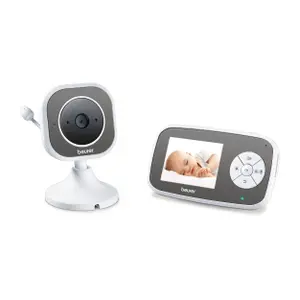
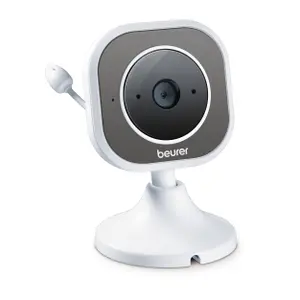
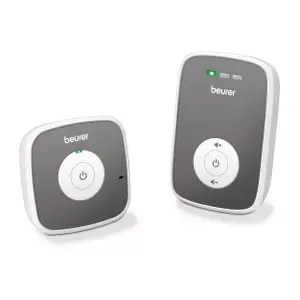
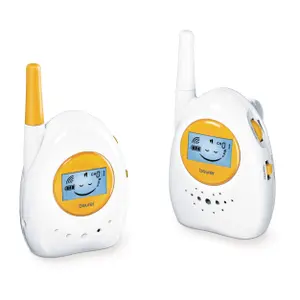
A baby monitor lets you leave the bedroom during nap time or in the evening while still keeping an ear out. Features vary widely, from simple audio models to cameras with night vision, temperature sensors and lullabies you can play remotely. Here’s how to choose the right device, position it correctly and limit your baby’s exposure to radio waves.
Keep an ear out, even from the living room.
Audio or video baby monitor: what each type monitors
An audio baby monitor sends cries and other sounds from the bedroom to a portable parent unit, often with lights that show how loud the sound is. This is handy when the television or dishwasher is on. Simple and lightweight, it’s enough for a home where the bedrooms are close together.
A video baby monitor adds a camera and screen, so you can quickly check whether your baby is asleep or restless without risking waking them by opening the door. Infrared night vision shows a black-and-white image in the dark, and some motorised cameras can be turned remotely to follow your child in a large cot. A larger screen is easier to read, but reduces the parent unit’s battery life.
Night lights, cots and safety around the baby monitor
A baby monitor is part of a set-up designed for your baby’s nights. Cots and beds provide a safe place to sleep, a night light gives off a soft glow for night-time wake-ups, and safety products protect sockets, doors and stairs. Bedroom sets bring matching furniture together, storage keeps the room organised, and decorations give it character.
Where to place the baby monitor in your baby’s room
Place the baby unit at least one metre from your child’s head. This greatly reduces exposure to radio waves while still picking up sounds clearly. Put it on a chest of drawers or fix the camera high on the wall, never in the cot or attached to the rails.
The power cable is the main hazard: it must be completely out of your baby’s reach, even when they can stand, as a cord can cause strangulation. Run it along the wall and secure it with clips, then check its position whenever you move the cot. Finally, angle the camera so you can see the whole mattress, avoiding a window behind it that could make the image hard to see.
Range, radio waves and ECO mode: technical features
The stated range is measured in an open field; indoors, walls, floors and concrete slabs can reduce it considerably. An out-of-range alert, which sounds when the connection drops, is therefore useful in a large house or garden.
To limit radio waves, ECO mode adjusts the transmission power according to the distance between the two units. Voice activation, or VOX mode, only transmits when a sound exceeds a certain level. Models that combine both features transmit much less during long periods of quiet sleep. Baby monitors that use Wi-Fi and an app have unlimited range, but transmit continuously.
Baby monitors: good times to buy
Baby monitors are often on birth lists, and it’s best to have one before coming home from hospital. Black Friday bedroom deals are a chance to buy one before the festive season, while the winter sales and the spring French Days coincide with babies born at the start of the year. The summer sales come before holidays with the grandparents, and in September bedroom clearance runs alongside new bedroom products.
Intercom, lullabies, temperature sensor: useful features
- The intercom, or walkie-talkie function, lets you speak to your baby from the parent unit and soothe them with a familiar voice before going to see them.
- Lullabies and white noise can be started remotely to help your baby settle back to sleep.
- The temperature sensor displays the room temperature, which should be kept at around eighteen to nineteen degrees.
- The built-in night light means you don’t have to switch on the main light during a night-time visit.
- A parent unit with a long-lasting battery can be carried around the house without needing to stay plugged in.
Frequently asked questions
Until what age should you use a baby monitor?
There’s no set age limit: many parents use one until their child is three or four, especially when they’re ill or in a multi-storey house. Some bring it out again later if their child has a fever or nightmares.
Can one baby monitor keep an eye on two children?
Yes, if you have a video model that supports several cameras on one screen, with a split or alternating display. For two nearby bedrooms, an audio model with an extra baby unit may also be enough, as long as the parent unit can tell them apart.
Can a Wi-Fi baby monitor be hacked?
There is a risk if the device is left with its original settings. Change the default password, install the manufacturer’s updates and secure your internet router. A model with a direct connection and no internet access avoids this risk.
Why is my baby monitor crackling?
Crackling is often caused by interference from a microwave, an internet router or a cordless phone, or by a unit being too far away. Move both units closer together, change the channel if the device allows it, and check the batteries are charged.
Can you take your baby monitor on holiday?
Yes, a model with a direct connection works anywhere without a network, whether you’re staying with the grandparents or in a holiday rental. Check whether you need a travel adaptor for the country you’re visiting, and test the range in an unfamiliar home before the first night.











