
Kickers for babies: leather for their first steps
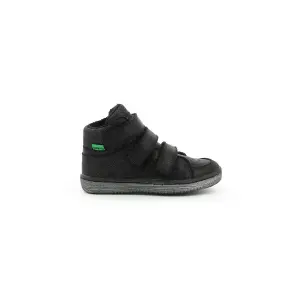
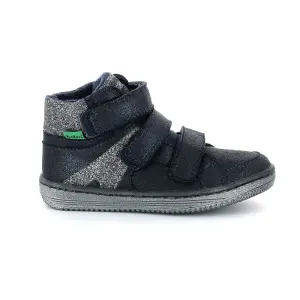
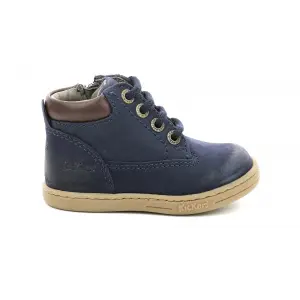
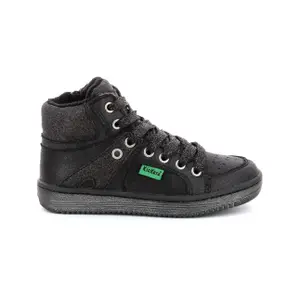
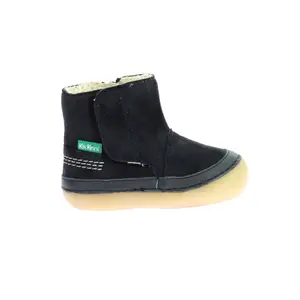
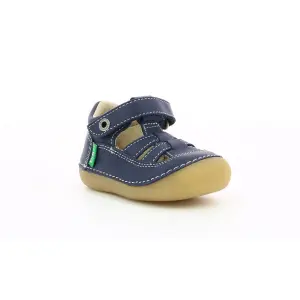
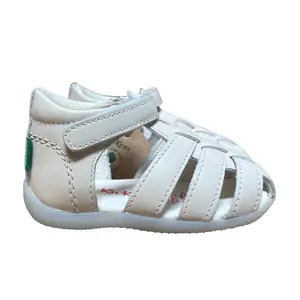
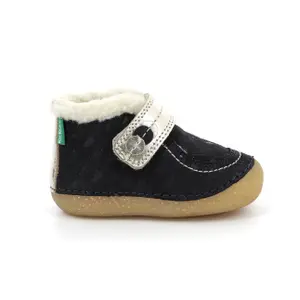
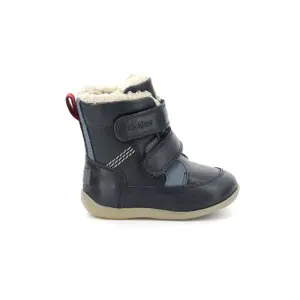
Kickers baby shoes carry on the spirit of a French brand founded in 1970: leather, a rubber sole and those two little red and green labels sewn on the side. For little ones, the brand offers high-top styles that support the ankle, easy-to-use touch-fastening or zip closures, and soft uppers that move with a still-wobbly foot.
Good support for every new step.
Why are so many Kickers first shoes high-tops?
Many Kickers baby shoes come up above the ankle bone. This padded high top wraps around the ankle without squeezing it and helps keep the child’s foot aligned while they develop their balance. It also stops the shoe coming off when your toddler sits down, gets up or starts crawling again.
The soft leather upper moulds to the foot without restricting it, while the front is wide enough for the toes to spread out with each step. The rubber sole should be able to bend at the base of the toes, where the foot rolls forward: bend it between your fingers before buying — it should offer only slight resistance.
Other brands for little feet
For comparison, the Geox page features styles with perforated soles that let sweat escape, a plus for long days at nursery. The adidas trainers with hook-and-loop fastenings have a sportier look, while Victoria canvas shoes are a lightweight option for summer. Finnish Reima shoes are made for rain and snow, while Crocs clogs are handy for the beach and garden.
Kickers, a brand born for the jeans generation
Kickers was founded in 1970 by Daniel Raufast. The idea came to him from a poster for the musical Hair, showing young people in jeans walking barefoot: he imagined a shoe made to go with jeans, in nubuck with a natural rubber sole. The Kick Hi, a high-top boot that became the brand’s emblem, followed in 1975.
Since then, the red and green labels sewn on the side have marked every pair, even in the smallest sizes, and children who grew up wearing them now put them on their own children. The brand belongs to the Royer Group, based in Fougères, Brittany.
Hook-and-loop fastenings, zips or laces: which fastening for a baby?
The choice of fastening depends mainly on the shape of the foot and how much time you have in the morning. Hook-and-loop fastening is the simplest: it opens wide, adjusts neatly around a chubby foot and will later let your child put their shoes on by themselves. The side zip, found on several high-top styles, makes them easier to put on, while an extra lace lets you set the fit once and for all.
Traditional laces hold the foot best, but take a little patience when it’s time to leave. Whatever the fastening, check that the tongue is padded and that the collar doesn’t leave a red mark on the skin after a day of wear.
Good times to buy a pair of Kickers first shoes
People often buy a child’s first Kickers when they start letting go of your hand, and there are several good times of year to do so. Black Friday and the festive season are a chance to give them a leather pair to mark their first steps. The winter sales, followed by the spring French Days, help you plan for the next size up, before the summer sales and the start of the school year. Current offers are collected on the special offers page.
Frequently asked questions
Do Kickers baby shoes come up large or small?
Parents’ opinions vary by style: some come up a little large, while others fit true to size. The safest option is to measure the foot, ideally using the foot measuring guide the brand provides, then leave one centimetre of growing room.
At what age should you buy their first Kickers?
The right time is when your child can walk on their own and starts going out on foot, often between one year and eighteen months. Before then, soft slippers or bare feet are enough at home.
How do you care for the leather on Kickers baby shoes?
Brush off the dust with a soft brush, wipe stains with a slightly damp cloth, then treat the leather with a suitable cream from time to time. Always leave them to dry away from a source of heat.
Can you pass on already-worn first shoes?
This isn’t recommended for a toddler, as the leather and sole take on the shape of the first child’s foot. A shoe that is already misshapen can affect the way a foot that is learning to walk bears weight.
How long does a shoe size last before the age of three?
Before the age of three, a child’s foot often grows by one shoe size every three or four months. So check the room in front of the toes regularly, as a young child rarely complains when their shoes have become too small.













