
Musical instruments and toys for children

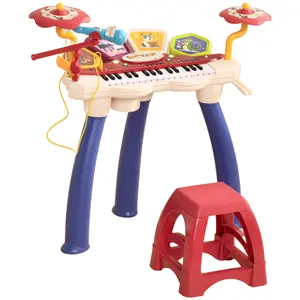
Starting at £59.95
£56.30


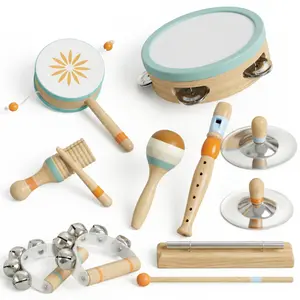
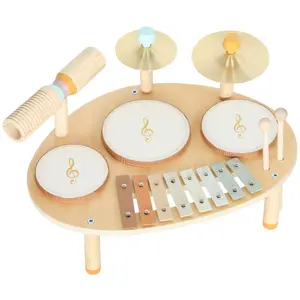


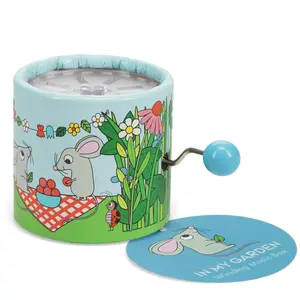
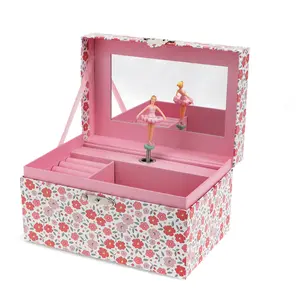
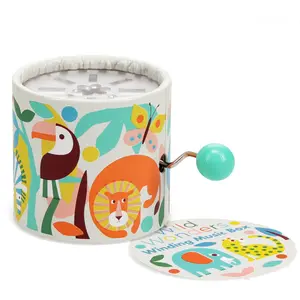


Long before they can talk, babies respond to sounds: music toys for children accompany them from the mobile that soothes them to sleep to the first instruments they shake, tap or bang. Chosen to suit their age, these toys stimulate their hearing, develop coordination and spark a love of rhythm, provided you follow the safety rules for little ones.
From the cot mobile to the first tambourine.
Musical mobiles: from birth to five months
A musical mobile is often a baby’s first sound-making toy. Hung above the cot, it plays a gentle tune while the shapes turn slowly, catching the eye of a newborn whose vision is still blurry. The In The Air mobile by Fabelab, a Copenhagen-based Danish brand that works with GOTS-certified organic cotton, and the Winnie the Pooh mobile by Rainbow Designs, a British publisher of classic characters, show two very different styles.
A mobile has a short lifespan: take it down as soon as your baby tries to get on all fours or pull themselves up, often at around five months, as they could grab it or pull a piece off.
Colouring, painting, origami: other activities
Between songs, little hands can get creative. The activity books and colours on the colouring page are a great companion to calm listening, painting lets children turn a melody into colours, and origami turns a folded sheet of paper into an animal, ideal for patient children who enjoy following a model step by step.
Tambourines and percussion: first instruments
Percussion instruments are the most natural choice for young children: they just need to tap or shake to make a sound, and the link between the action and the noise is easy to understand. A tambourine, with its striking surface and jingling little cymbals, invites children to keep time to a nursery rhyme or follow the music as they walk. Rex London, a London-based company founded in 1981 on a stall at Portobello Road Market, makes versions illustrated with fairies or wild animals: Fairies In The Garden and Wild Wonders.
Before the age of three, check the age stated on the packaging: the little cymbals and small parts must be firmly attached.
Listening to music: the right volume and device
When playing music for a young child, a speaker is better than headphones: everyone can hear the sound, and the adult stays in control of the volume. Speakers designed for children, such as the iParty Bluetooth speaker by Lexibook, a French company founded in 1981 in Les Ulis, also have a microphone and light effects that turn listening into a karaoke session.
If your child uses headphones, choose a model with the volume limited to 85 decibels, the level most often recommended for prolonged listening, and limit the length of each session. A good rule of thumb: your child should be able to hear someone speaking next to them without taking off their headphones.
Musical toys: when to find a good deal
Plan for a mobile before the baby is born, and a tambourine makes a lovely birthday present. Black Friday kicks off the end-of-year gift-buying season, then the winter sales are a chance to kit out the nursery as a new arrival approaches. The spring French Days and summer sales come before the new school year and the first musical play sessions at nursery. Check out the great deals and new toys and games between these busy shopping periods.
Frequently asked questions
At what age can a child play an instrument?
From six months, babies can shake a rattle or an age-appropriate maraca. At around two, they can tap along on a tambourine or xylophone; learning a melodic instrument, such as the flute or piano, usually starts at around six or seven.
What music should I play to help a child fall asleep?
Choose slow, steady tunes without lyrics or with a gentle voice: lullabies, calm classical music or nursery rhymes sung softly. Keep the volume low and stop the music shortly after your child falls asleep.
How can I introduce my baby to music every day?
Sing during bath time, nappy changes or car journeys: your voice is your baby’s favourite music. Then try different styles and let them clap or tap on a box; the essential thing is to enjoy it together.
Can a mobile help a baby fall asleep?
It can be part of a bedtime routine, as long as it’s a familiar cue rather than a source of stimulation: a short tune, always the same, with shapes that turn slowly. Stop it if your baby gets restless instead of calming down.
What music gets children dancing?
Action songs, where the lyrics tell children what movements to do, get little ones dancing from the age of two. Older children prefer strong rhythms and games such as musical statues, where they have to freeze as soon as the music stops.











