
Colouring books, notebooks and colours for children





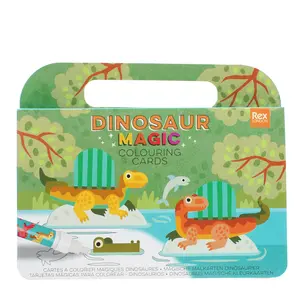
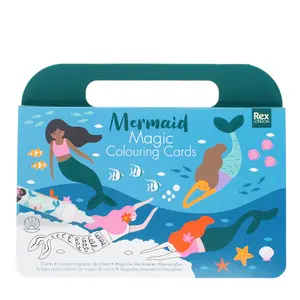
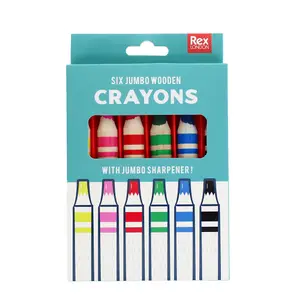
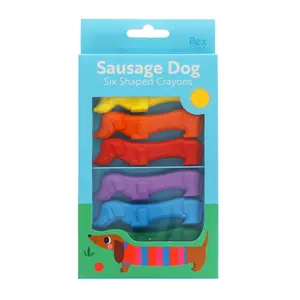


Colouring starts with happy scribbles at around eighteen months and, a few years later, becomes a real exercise in precision. The materials follow this progression: thick sticks that are easy for little hands to grip, books with bold outlines for beginners, then watercolour pencils and finer drawings once the child has mastered their hand movements.
From first scribbles to precise drawing.
What age should children start colouring, and what materials should they use?
At around eighteen months, a child grips the tool in their whole hand and makes big movements from the shoulder: this is the scribbling stage, best done on a large sheet of paper fixed to the table. Between two and three years old, the fingers take over and the marks become intentional. Short, chunky sticks, such as the silky colours Colourful Creatures by Rex London, glide over the paper without needing to press, helping to avoid frustration.
The pincer grip, between the thumb, index finger and middle finger, usually develops between the ages of four and six. This is the time to move on to fine colour pencils with wooden barrels and more detailed pictures that children try to fill in without going over the lines.
Painting, origami and music: extending the activity
When colouring is no longer enough, other creative activities can take over. The painting page has everything you need to move from drawing lines to adding colour with a brush or finger. Origami works the same fingers in a different way, by folding paper instead of colouring it, while the music page brings together tambourines and musical mobiles for a sound break between drawings.
Colouring books: choosing by age and theme
A good colouring book is best chosen by the thickness of its outlines. For three- to five-year-olds, simple pictures with thick lines, like those in Avenue Mandarine's Graffy Easy books about farm or sea animals, leave large areas to fill in without getting discouraged. Detachable sheets can be put up on the wall or given to a grandparent.
The theme matters just as much as the format: children will colour animals they know or have just seen on a walk for longer. Avenue Mandarine, a French brand of creative activities designed for children aged two and up, is part of the Clairefontaine paper group.
Watercolour pencils: from drawing to brushwork
Watercolour pencils are used like ordinary coloured pencils, then transformed with a damp brush: the colour dissolves and the lines blend into washes. The Aquarelle range by Printworks, a Stockholm-based Swedish design company, encases its pencils in limewood and stores them in a metal tin that protects them in a school bag. It is suitable for children who have already mastered the pincer grip, often from the age of six.
For the best effect, use thick paper that can take water without warping, and a barely damp brush. Start with a light area, such as the sky, to show your child how the colour spreads, then let them experiment.
Colouring: the best times to stock up
Pencils wear down quickly and colouring books fill up, so it makes sense to group your purchases. Black Friday and the festive season are a chance to tuck a box of coloured pencils under the tree, while the winter sales are a good time to top up your supply of colouring books. The spring French Days and summer sales help you get ready for the new school year, when the pencil case needs to be fully stocked. The games and toys clearance and new games and toys round out the selection.
Frequently asked questions
How can I teach a child to colour without going over the lines?
Start with pictures with thick outlines and suggest tracing the edge of each area before filling it in. Accuracy develops as their movements mature, rarely before the age of five: it's better to encourage than correct.
Should I correct a child who holds their coloured pencil badly?
Before the age of four, grips vary a lot and are rarely worth correcting by force. Short or triangular pencils naturally guide the fingers; if their grip is still tense in the final year of nursery, talk to their teacher or doctor.
Are stickers suitable for toddlers?
Peeling off and placing a sticker works the finger pincer grip as soon as a child no longer puts everything in their mouth, often at around two or three years old. Check the age recommendation on the packaging, as these small stickers could be swallowed.
How do you remove a colouring mark from clothing?
Most coloured pencils contain wax: scrape off any excess, then rub with Marseille soap before machine washing. Avoid hot water and the tumble dryer until the mark has gone, as heat could set it.
How many colours should you start with?
A dozen colours is plenty for a three- or four-year-old, who will find them easier to choose from than a large box. Add more shades as their interests develop, when they start looking for the right green for a leaf or the right brown for a horse.











