
Creative activities for children aged two to ten


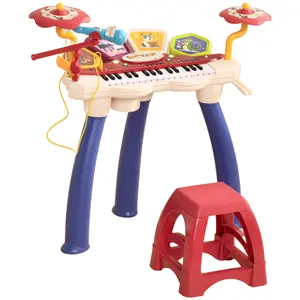
Starting at £59.95
£56.30




Creative activities give children the pleasure of making something with their own hands: a colouring page, some paper folding, a little tune on a tambourine. They develop the fine motor skills they'll need for writing, as well as patience and concentration. This selection brings together colouring books, watercolour paints, stickers, origami, cross-stitch embroidery, instruments and model kits to build.
Making things by hand, at every age.
Which craft activity for which age
- At around two years old, children stick on stickers and decals, scribble with chunky crayons and tap a tambourine: they discover marks and rhythm.
- At three years old, they handle safety scissors, paint with a thick brush and fill in colouring pictures with wide outlines, like the 24-page Graffy Easy books from Avenue Mandarine, featuring farm or sea animals.
- At around five or six, cross-stitch from Rex London, with a butterfly or ladybird design, and simple paper folding call for more precision.
- As they get older, children can try assembling hydraulic models, such as a robot arm or a digger truck, combining DIY and science.
Colouring, origami, music and painting
There’s a page for every activity. The colouring section brings together books, pads and stickers, from bold outlines for little ones to detailed patterns for older children. The origami section offers paper and folding kits, including three-dimensional animals. The music page brings together tambourines, rhythm instruments and musical mobiles, while the painting page features watercolours, gouache and paints made for children.
Colours, paper and materials suited to little hands
Soft, silky crayons glide over paper without needing to press hard, which is ideal for little hands that are still developing their strength: the box of twelve Colourful Creatures crayons from Rex London, illustrated with animals, is one example. Watercolour pencils from Printworks can first be used dry, then turned into watercolours with a wet brush, offering a gentle introduction to painting.
For very young children, finger paints must meet a specific standard, EN 71-7, which regulates their ingredients because children may put them in their mouths. Choose washable paints and a covering apron.
What creative activities can do for children
Cutting, folding and pushing a blunt needle through a cross-stitch grid all help strengthen the pincer grip between thumb and index finger, which they’ll later use to hold a pen. Colouring teaches children to stay within the lines, while origami teaches them to follow instructions step by step. This Japanese art of paper folding takes its name from two Japanese words meaning fold and paper; the three-dimensional peacock from HQ-Invento offers an impressive version for older children.
Let children choose their colours and accept an imperfect result: the pride they feel in the finished object matters more than perfection.
Creative activities on offer for Wednesdays and the school holidays
Creative activities are often bought a few at a time. Black Friday and the festive season are good times to fill a craft box to give as a present; the winter sales are a chance to replace books and crayons for the February half-term, and the spring French Days are a good time to get ready for rainy afternoons. The summer sales help keep children busy over the long holidays, and the back-to-school period is a good time to stock up for Wednesdays. End-of-line offers can be found in clearance toys and games, while new ideas are in new toys and games.
Frequently asked questions
How can I keep a four-year-old busy on a rainy day?
Set up a table covered with a wipe-clean cloth, with a colouring book, stickers to place on a picture and a pair of safety scissors. Switching between sticking, colouring and cutting in 20-minute sessions helps hold their attention without tiring them out.
How do I remove a paint stain from fabric?
Act quickly: rinse the stain in cold water from the reverse side before it dries, then wash with stain-removing soap. Children’s washable paints usually come out in the first wash, as long as you don’t tumble-dry the fabric beforehand.
At what age can children start origami?
Simple folds, such as a hat or a boat, are suitable from around five or six with an adult’s help. Three-dimensional models made from dozens of pieces that fit together are better suited to children aged eight or ten and over, depending on their patience.
How should I store craft materials?
Use clear boxes for each type of material—paper, crayons, collage supplies—so children can find things and tidy them away on their own. Keep scissors, needles and small beads out of reach if a younger brother or sister shares the room.
What creative activity should I give a seven-year-old?
At seven, children often enjoy a kit that results in a finished object: cross-stitch, a model to assemble or three-dimensional origami. Choose something just a little more challenging than what they usually do, with illustrated instructions they can follow almost on their own.











