
Trainers for children, girls and boys, at every age






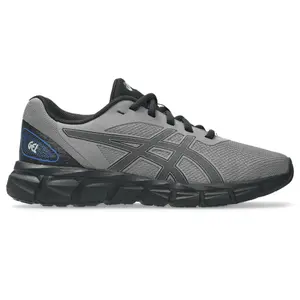


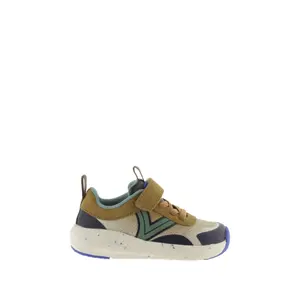
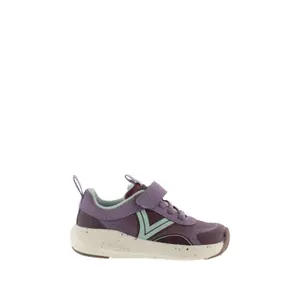
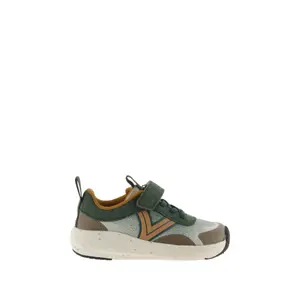
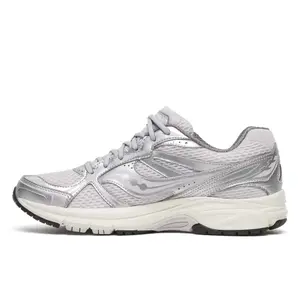
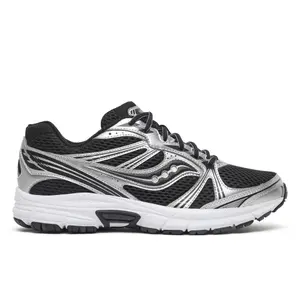
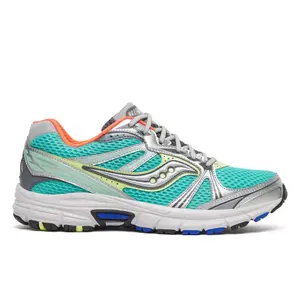
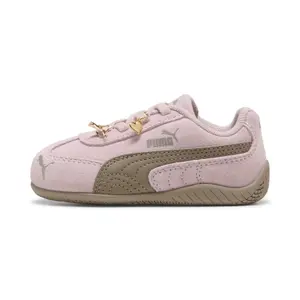


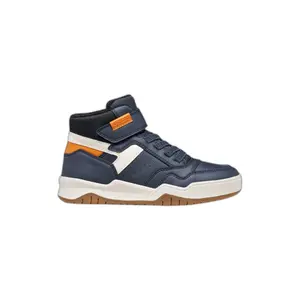
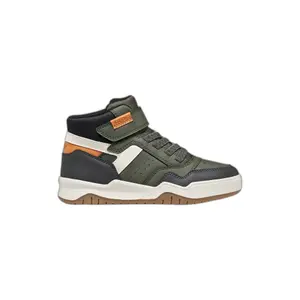
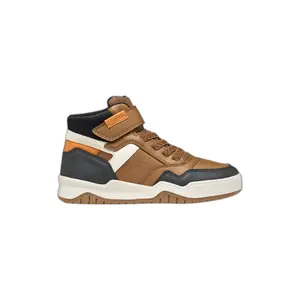


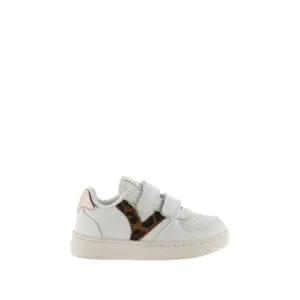
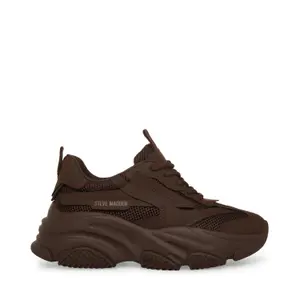

Children’s trainers are the shoes they wear every day: they head off to school in the morning, run around at break time, jump in puddles and end up at the park. They need to support the foot, absorb shocks and be easy to put on without help. From Velcro styles for the little ones to lace-up trainers for secondary school pupils, every age calls for a different fastening and sole.
Comfort from morning to night, at every age.
Hook-and-loop, elastic or laces: which fastening for each age?
Until they start nursery school, hook-and-loop fastenings are the best choice: children can put their shoes on by themselves, an adult can adjust the fit in one quick move, and the trainers stay fastened all day. Two straps are better than one, as they spread the support across the instep.
Elastic laces combined with a strap give the look of lace-up trainers without having to retie the knot, making them a good step up at around five or six years old. Traditional lacing comes when children can tie their own laces, often in primary school. It gives the most precise fit, as long as the laces are retied each time rather than the shoes being pulled on with the heel counter crushed down.
Trainers by brand
Each brand has its own page. adidas trainers include children’s sizes of the Samba, Gazelle and Superstar. At Puma, the Suede and Smash come in hook-and-loop versions. Hummel brings its handball heritage and chevrons, Geox its breathable sole, and Victoria its canvas and suede trainers from La Rioja.
Which trainers for a child aged 1, 2, 3 or 4?
Before the age of two, when their walking becomes steadier, look for trainers with a flexible sole that bends under the forefoot, a firm heel counter to hold the heel in place, and a reinforced toe to protect against scuffs from crawling on all fours. A high-top isn’t essential if the heel is held securely.
Between the ages of two and four, children run, climb and fall: the sole should grip, protect against stones and stay lightweight. Trainers that are too heavy or too stiff tire out still-small legs. For a wide foot, common in young children, some brands offer wider-fitting styles, such as the Victoria Tribu in its horma ancha version, literally “wide fit”.
Asics, Victoria, Gola: what sets the leading brands apart
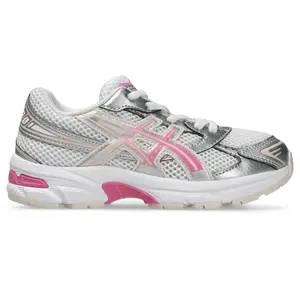
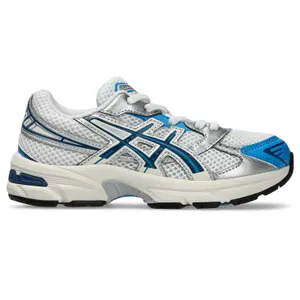
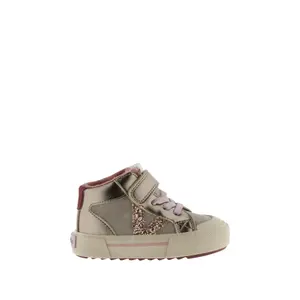
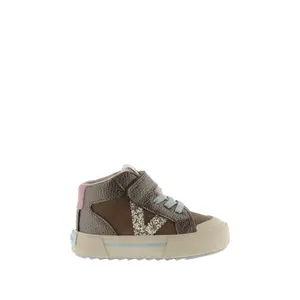
Asics, founded in Kobe in 1949, brings its running expertise to children’s shoes: the Gel-Quantum Lyte, available in GS sizes for older children and PS sizes for younger ones, has Gel cushioning in the heel. Spanish brand Victoria, founded in La Rioja in 1915, makes the Tribu, a children’s trainer with hook-and-loop fastenings in suede or canvas, sometimes finished with metallic stripes.
British brand Gola, founded in Leicester in 1905, takes its name from the anagram of the word “goal” and offers retro styles such as the Viper and Hawk. Skechers, founded in California in 1992, focuses on lightweight soles and easy fastenings for younger children.
Children’s trainers: when to buy
Children change shoe size several times a year, so it pays to buy at the right time. Black Friday and the festive season are good times to give them a branded pair for Christmas. The winter sales, followed by the spring French Days, come around when the worn-out winter pair often needs replacing. After the summer sales, back-to-school is a good time to check the shoe clearance and new shoes.
Frequently asked questions
How do you convert foot length into shoe size?
French shoe sizes are based on the Paris point, which is two-thirds of a centimetre. Add about one centimetre to the foot length, then multiply by one and a half: a 17-centimetre foot gives a size 27.
How do you wash children’s trainers without damaging them?
Remove the laces and insoles, then wash canvas or mesh styles at 30 degrees in a pillowcase. Clean leather and suede by hand. Always leave them to air-dry, never put them in a tumble dryer or on a radiator.
How many pairs of trainers does a child need?
Two pairs worn in rotation are usually enough: each pair can dry for a day between wears, which helps limit odours and makes them last longer. Add a pair of sports shoes if the school or club requires them.
Are fashion trainers suitable for sports in the gym?
Not always. Many sports halls require clean, non-marking soles that are only worn indoors, and the flat soles of fashion trainers don’t grip well when changing direction. Indoor sports shoes are a safer choice for PE lessons.
Should you buy trainers a size bigger so they last longer?
No, a pair that’s too big can cause trips and affect the way a child walks. About one centimetre of room is already enough to allow for a few months’ growth; beyond one and a half centimetres, the trainers won’t hold the foot securely.











