
Chess games for learning and improving as a family

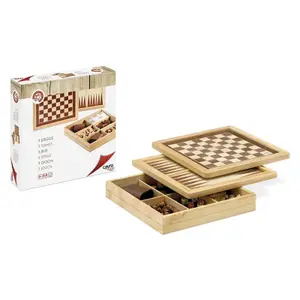
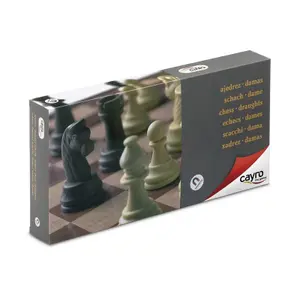
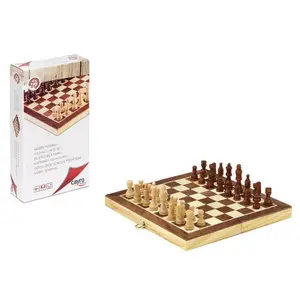
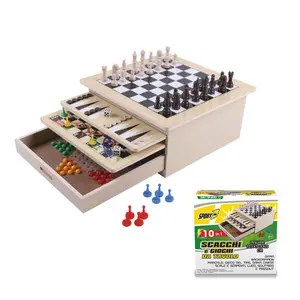
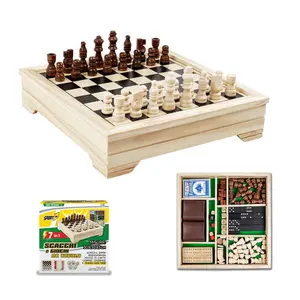
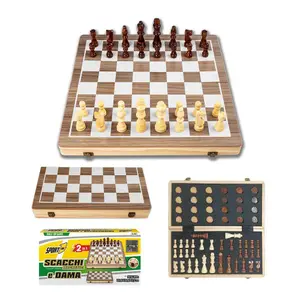


Chess sets have stood the test of time, with the same sixty-four squares and the same sixteen pieces per side. For a child, chess is a lesson in patience and forward planning: every move is carefully considered, every mistake analysed. A family chess set, made of wood or in a travel version, is all you need to start playing against a parent, brother or sister.
Sixty-four squares to learn to think ahead.
At what age can a child learn chess?
Many clubs welcome children from the age of five or six, when they can recognise the pieces, count the squares and stay focused for around twenty minutes. Before then, simple games can introduce how each piece moves, pawn races or king hunts, without requiring a full game.
Learning follows a natural progression: first how the pieces move, then the special rules such as castling, pawn promotion or en passant, and finally the first principles of strategy: occupying the centre, developing your pieces and keeping your king safe. Playing regularly against an adult who talks through their moves can speed up progress considerably.
Brainteasers, puzzles and other thinking games
Those who enjoy a challenge will find plenty of ways to mix things up: brainteasers develop logic when played alone, board games and other games bring together strategy games and family classics, while jigsaw puzzles call for patient concentration. Card games round out the collection for quick games.
Setting up the chessboard and pieces correctly
Place the chessboard so that each player has a white square at the bottom right. The rooks go in the corners, followed by the knights and then the bishops; the queen goes on her own colour, the white queen on a white square and the black queen on a black square, while the king goes on the remaining square beside her. The eight pawns make up the second row.
White always makes the first move. Repeating these two pointers — white square on the right and queen on her own colour — is enough for children to set up the game by themselves in under a minute, then focus on the game itself.
Piece size, wood or plastic: choosing the right chess set
The most common style of chess pieces, known as Staunton, was registered in England in 1849: a king topped with a cross, a crowned queen, a bishop with a split mitre, and a knight shaped like a horse's head. Their easy-to-recognise shapes help beginners tell each piece apart. For a child, choose pieces that are big enough to hold comfortably and a chessboard with squares sized to match their bases, so they do not overhang.
Wood feels pleasant to touch and has a reassuring weight that keeps pieces steady; plastic is more resistant to drops and easy to wash. Travel sets, with magnetic pieces or pegs, let you carry on playing in the car without knocking everything over.
Chessboards: the best times to buy one
A first wooden chessboard makes a lovely Christmas present, and Black Friday is a chance to buy one ahead of the festive season. The winter sales are a good time to pick up a travel set, the spring French Days and summer sales are ideal for holiday games, and back-to-school season, when children sign up to clubs, coincides with games and toys clearance and new arrivals.
Frequently asked questions
Does a beginner need an electronic chessboard?
An electronic chessboard, which plays against the child and flags illegal moves, lets them practise alone and adjust the difficulty. It does not replace playing against another person, where they also learn to read their opponent and manage their emotions.
Does regular play improve concentration?
A game requires players to stay focused over time, think several moves ahead and check before they move: all useful habits for building concentration. Some countries, such as Armenia, have even added chess to the primary school curriculum.
How can you let a child win without them realising?
Rather than deliberately making bad moves, start without one of your pieces — a rook or the queen — and reduce this handicap as they improve. The child wins fairly and can see their progress from one game to the next.
What does checkmate mean?
The king is in check when an opponent's piece attacks it; it must then move to safety, block the attack with a piece or capture the attacker. If there is no way to escape the attack, it is checkmate and that side loses the game.
How long does a game between young players last?
Between beginners, a game often lasts from ten to thirty minutes. In junior tournaments, each player has a fixed amount of time on a clock, from a few minutes in a rapid game to an hour or more in a longer game.











