
Consoles, video games and computers for children

Video game consoles and games for children cover a wide range of uses: educational computers that help children practise letters and numbers in French and English, consoles that bring the family together for a game, and headsets that shut players off from the world around them. The right choice depends on your child’s age, the content on offer and how much screen time you want at home.
Play, learn and know when to stop.
Educational computers: learning through play from the age of four
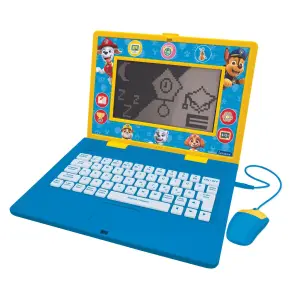
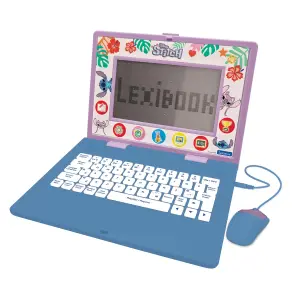
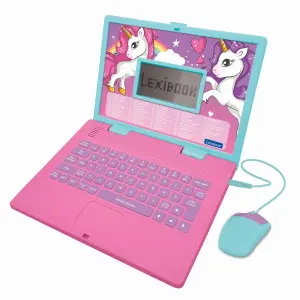
An educational computer looks like an adult's laptop, with a keyboard and a small screen, but replaces the internet with built-in activities: letters, sums, logic, music or memory games. Lexibook’s bilingual models, from the French company founded in 1981 in Les Ulis, offer these activities in French and English. Their laptops come in designs featuring Paw Patrol, Stitch or a unicorn to encourage younger children to give them a try.
These devices are aimed mainly at children aged four to eight, who can learn to use a keyboard without the risk of coming across unsuitable content. On talking models, a voice guides the child and helps them progress at their own pace.
Board games, building sets and figures: screen-free fun
It’s good to alternate screen time with other kinds of play. Board games bring the family together around a table, learning and educational games teach without a screen, and building sets develop spatial awareness. Fans of video game heroes can find their favourite characters as figures, while arts and crafts offer a welcome hands-on break.
Understand PEGI ratings before buying a game
Introduced in April 2003 to replace national systems across Europe, the PEGI rating appears on the box of every video game. It shows the minimum recommended age for the content, in five age groups: 3, 7, 12, 16 and 18. This number says nothing about how difficult the game is: a game rated 3 can be challenging, while one rated 12 can be very easy to pick up.
Pictograms accompany the age rating and explain why the game has been given that rating: violence, fear, bad language, gambling or in-game purchases. The last of these deserves particular attention with young players, as it means you can spend real money in the game. The console’s parental controls can be used to block these purchases.
Screen time: guidelines by age
The expert committee on children’s exposure to screens, whose report was presented to the President of the Republic in April 2024, recommends that children under three should not be exposed to screens. Between the ages of three and six, use should be occasional, with educational content and an adult present; after that, moderate use can be part of a range of other activities.
In practice, set clear rules before switching on the console: agree how long they can play for, and have no screens during meals or just before bedtime. Playing with your child is the best way to find out what games they like and talk about them together. For headphones, choose a model with the volume limited to 85 decibels.
Consoles and computers: when to buy
A console or educational computer is often planned for Christmas or a big birthday. Black Friday is the first opportunity, just before the festive season, followed by the winter sales, when you can pick up a headset or a game. The spring French Days and summer sales come before the start of the school year, making it a good time to buy an educational computer for a child starting Year 3. You can also find surprises in the clearance toys and games.
Frequently asked questions
Which video game is suitable for an eight-year-old?
At this age, games rated PEGI 3 or 7 are suitable: platformers, racing games, building games or puzzles. Look for games that can be played by several people on the same screen, as they encourage interaction rather than isolation.
What age is right for a first console?
There’s no official age, but screen-time guidelines suggest waiting until at least six for independent use. A home console shared by the family is easier to supervise than a handheld console that a child takes to their bedroom.
Is an educational computer useful before starting school?
It can help a child get familiar with letters, numbers and the keyboard, especially when they use it with an adult. It doesn’t replace books or hands-on play, and a few short sessions a week are more than enough.
How do I set up parental controls on a console?
Recent consoles offer parental controls in their settings or through a phone app. You can use them to limit playing time, filter games by their PEGI rating, and block purchases or online interactions.
Can video games benefit a child?
Some games develop logic, coordination or cooperation, as long as they’re suitable for the child’s age and played in moderation. The benefits depend mainly on choosing the right game and talking about it with an adult, much more than on the time spent in front of a screen.













