
Soft toys for babies, your child’s premier companion


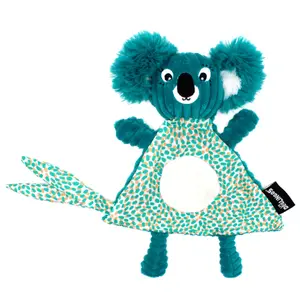
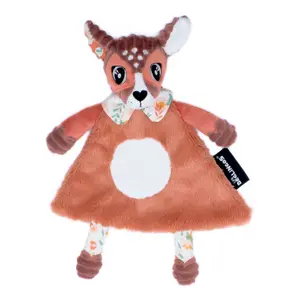
A comfort blanket is often the first object a child chooses for themselves, and one they won’t part with for years. Muslin cloth with a rabbit’s head, little fox that jingles, terry-cloth Miffy or Hedwig the owl: each one has its own texture and shape. Here’s how to choose a safe comfort blanket that’s easy to grab and wash, and that your baby can take everywhere.
Soft, safe and always within reach.
Flat comforter, animal comforter or rattle comforter: which one to choose
A flat comforter, a square of fabric with an animal head attached, is the easiest for a newborn to grasp: it crumples in their hand, rests against their cheek and weighs almost nothing. A more padded animal comforter comes into its own when a child starts to hold and cuddle it, like the hedgehog from Jemini's Luminou range or the Animal Cuddle fawn from Fabelab.
A rattle comforter has a small bell hidden inside: Jemini's Rattle Fox jingles whenever it is shaken and stimulates hearing during playtime. Textures matter too: the towelling of Bon Ton Toys's Miffy Terry toys, velvet and organic cotton all feel different, and that is often what makes the difference to a baby.
Soft toys, rattles and dolls to go with a comforter
As your child grows, other fabric companions join their comforter. Soft toys come in larger sizes, for cuddling or collecting, while rattles are there for those first few months of playtime. Dolls and baby dolls encourage make-believe play, puppets inspire their first stories, and soft rag dolls with long, floppy legs are easy for little hands to hold.
Miffy, Winnie the Pooh, Hedwig: character comforters
Miffy, the little rabbit drawn by Dutch artist Dick Bruna in a first book published in 1955, is available as a comforter from two Dutch brands, Bon Ton Toys and Just Dutch: in Terry towelling, floral print or black-and-white houndstooth, whose contrast catches little ones' eyes.
British brand Rainbow Designs features Winnie the Pooh and Piglet in its Classic range, with artwork close to the original illustrations, as well as a Harry Potter collection designed for babies, featuring Hedwig the owl and a little wizard with glasses. Jemini, a French specialist in licensed soft toys, and German brand Nici, with its Kleine Prinzessin rabbit, round out these comforters, ideal as gifts from birth.
Comforters and infant sleep: safety guidelines
To prevent sudden infant death, French guidelines recommend keeping the cot clear during the first year: lay your baby on their back, in a sleeping bag, on a firm mattress, with no pillow, blanket or soft object. The risk peaks at around four months. So at first, comforters are for awake time, cuddles and falling asleep in your arms; they can go in the cot later, when your paediatrician advises you to do so.
As for manufacturing, a comforter intended for children under three must meet the EN 71 standard and carry the CE marking: seams that can withstand pulling, embroidered rather than attached eyes, and no parts that can come loose. Check the seams regularly and remove any comforter that is coming apart.
When to give a comforter
A comforter is one of the first newborn gifts, and it is worth buying one early so you have a spare. Black Friday comes at just the right time for getting ready for the festive season, when character comforters often find their way under the Christmas tree. The winter sales followed by the spring French Days are a chance to add to a baby gift list; the summer sales are handy before holidays, and when nursery starts, toy clearance runs alongside the latest toys.
How to wash a comforter without damaging it
A comforter goes from mouth to floor several times a day, so it needs regular washing. Always check the label first. Most fabric comforters can be washed on a 30-degree delicate cycle, inside a tied pillowcase or a laundry bag to protect the embroidery and ears.
Dry it flat or hanging in the open air, away from a radiator: heat makes the fibres stiff and shrinks towelling. For a rattle comforter, hand-wash it or clean the surface, as the bell does not cope well with long spin cycles. Wash it during a nap or while your child is staying overnight with their grandparents: many children recognise their comforter by its smell and don't take kindly to it being gone for long.
Frequently asked questions
At what age does a baby become attached to their comforter?
Attachment often develops in the second half of the first year, when a child becomes aware of being apart from their parents. They choose it themselves: sometimes it is the comforter they were given, sometimes a simple muslin cloth or a piece of clothing with a familiar smell.
Should I buy two identical comforters?
It is a very useful precaution: losing a comforter can turn bedtime into a nightmare. Swap the two around from the start so they pick up the same smell and wear; otherwise, your child will soon spot the substitute.
Can a comforter go with a child to nursery?
Yes, most nurseries and childminders allow them and recommend them to help children settle in. Label it with the child's name using a sewn-on label, and pack a bag pocket for it so it can travel without getting dirty.
What size comforter is best for a newborn?
A small, lightweight and soft one, around 20 centimetres long, that a child can hold in one hand and take everywhere. Larger ones are more cumbersome and don't travel well; they are better suited as bedroom soft toys.
How old is a child when they stop keeping their comforter?
There is no set age: many children keep theirs through nursery school, and some well beyond, especially for sleeping. They usually let go of it on their own; there is no need to force them, especially as a comforter helps them through times when they are tired.











