
Soft toys for children and babies, perfect for cuddling and collecting


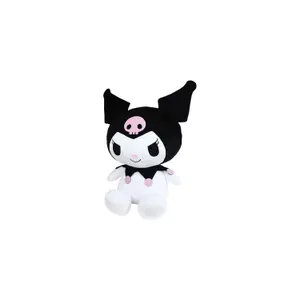
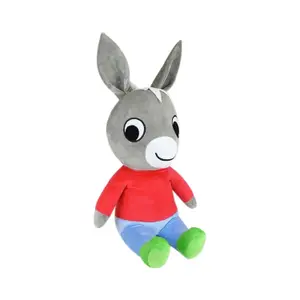




A soft toy often accompanies a child throughout their childhood: a nap-time companion, a confidante, then part of a collection. A corduroy Miffy, a terry cloth elephant, a lying-down penguin or a cartoon hero: the fabric, size and character all make a difference. Here’s how to choose a soft toy that’s suitable for your child’s age, safe and long-lasting.
Soft companions for every stage.
Which soft toy for a one-, two-, three- or four-year-old?
Before the age of three, a soft toy should be designed for under-threes: embroidered eyes and nose, strong seams and short pile that won’t come loose in the mouth. At around one year old, a medium-sized, lightweight toy that can be dragged by a paw is a better fit than a giant one the child can’t carry.
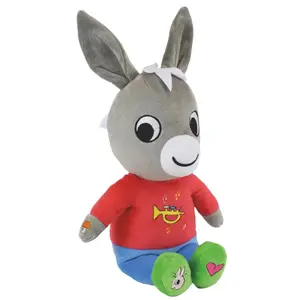
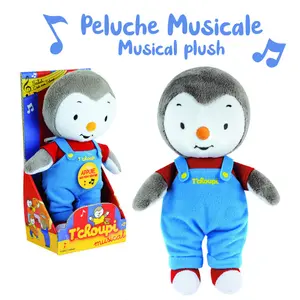
At two years old, soft toys become part of pretend play: children feed them, put them to bed and take them for walks, while familiar characters like T'choupi or Peppa Pig inspire their first stories. Between the ages of three and four, children ask for their cartoon heroes and sometimes start a collection; it’s also the age when a large soft toy finds its place at the foot of the bed or in a reading corner.
Comforters, puppets and dolls to discover
Soft toys are never far from other fabric companions. Comforters, smaller and often flat, are ideal for sleep and times apart, while rattles accompany those first few months. Puppets come to life in your hand, rag dolls have long dangling legs, and dolls extend pretend play.
Terry cloth, corduroy and long pile: the feel of every soft toy
The terry cloth used for Miffy and Terry the elephant by Bon Ton Toys, a Dutch soft toy maker, feels like a bath towel: looped, absorbent and very soft. The corduroy used for Miffy Eco has a texture that little fingers love to follow, while the Smiley Fuzzy, with its longer pile, is as cuddly as a little fluffy ball.
Danish brand Fabelab makes its Buddy from GOTS-certified organic cotton, a guarantee of the fibres’ origin. Flow Amsterdam creates gentle characters like George the elephant and Liva the goose, while German brand Nici, founded in 1986, gives its penguin Waddle a lying-down pose that makes it a cuddly pillow. French brand Trois Kilos Sept adds its Mimi mouse, with a delicate nose.
Soft toy heroes: Miffy, Eeyore, Stitch and Rapunzel
- Miffy, the rabbit created by Dick Bruna in 1955, is recognisable by her cross-shaped mouth; Bon Ton Toys makes her as a Key Teddy key ring, a mini Tiny Teddy or a pastel-coloured Cotton Candy version.
- Eeyore and Winnie, in Rainbow Designs’ Classic range, bring back the charm of the illustrations in A. A. Milne’s books.
- Stitch and Angel, the blue Disney alien and his pink companion, appeal to children and teenagers alike.
- Rapunzel, from Simba, gives fans of the Disney princess a soft toy with long hair.
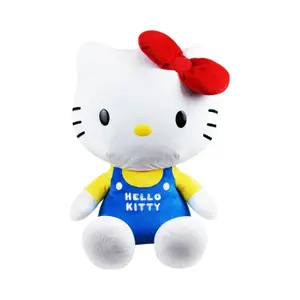
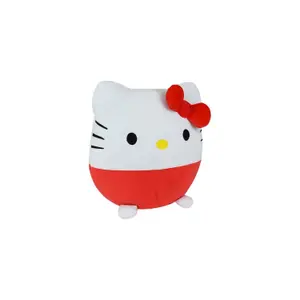
- At Jemini, a French licensing specialist, Hello Kitty, the Kidimols dogs and the Jeminosaures, with sound and lights, complete the menagerie.
Soft toys to give as gifts: key occasions
Soft toys are one of the most popular gifts for children, from birth through to birthdays. Black Friday is a chance to get ahead on the festive season, when cartoon heroes are in high demand. The winter sales, followed by the spring French Days, are a good time to add to a collection; the summer sales are ideal for the holidays, and at the start of the school year, toy clearance shares the spotlight with new toys.
Washing and storing bedroom soft toys
Most soft toys can be machine-washed on a delicate cycle at thirty degrees, inside a closed pillowcase to protect embroidery and ears. Toys with sound or lights are an exception: remove the unit if it can be taken out; otherwise, wipe them clean with a damp mitt and a little mild soap. Always air-dry them, as the heat from a tumble dryer can matt long pile.
For storage, a soft toy hammock fixed in a corner, a large fabric basket or a low shelf lets children choose for themselves. Rotating the soft toys, putting some away for a few weeks, makes the ones brought back out feel exciting again and stops the bed from overflowing with companions.
Frequently asked questions
Where does the name teddy bear come from?
The English term comes from Theodore Roosevelt, nicknamed Teddy, who refused to shoot a bear that had been tied up during a hunt in 1902. A newspaper cartoon made the story famous, and the teddy bear was born almost at the same time in the United States and at the German company Steiff.
Is a soft toy with sound and lights suitable for a baby?
Yes, if it has an age recommendation that’s suitable and the CE mark. Check that the battery compartment is secured with a screw and out of reach of little fingers, and don’t leave it switched on in the cot while the baby is asleep.
Do soft toys encourage dust mite allergies?
They collect dust and dust mites, especially in bed. Wash the most cuddled ones regularly. For toys that can’t go in the washing machine, leaving them in a closed bag in the freezer for twenty-four hours gets rid of many of the dust mites.
Which soft toy should you give for a first birthday?
A medium-sized, lightweight toy that the child can carry by themselves, in a material they enjoy touching, such as terry cloth or velvet. A character with simple shapes that’s easy to name often becomes a lasting playmate.
What’s the difference between a soft toy and a comforter?
A comforter is the one special object, often small and flat, that a child chooses for reassurance and never wants to be without. A soft toy is more padded and is used for play, decoration or collecting, although some eventually become comforters.











