
Floppy-armed, floppy-legged puppets for children
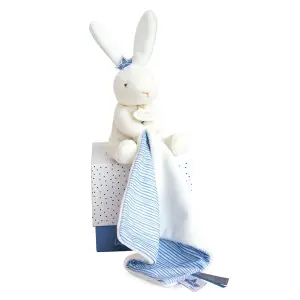
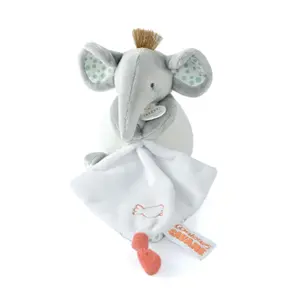
The rag doll is recognised by its long arms and legs that dangle loosely. An elephant with its mini comforter, a rabbit dressed as a sailor or an articulated figure that raises its arms when you pull the string: it can be held in one hand, swung and cuddled. Here’s how to choose a rag doll that’s right for your child’s age and care for it so it lasts.
Soft limbs for big cuddles.
Soft limberjacks or jointed limberjacks: two toys under one name
A soft limberjack is a soft toy with a small body and long, lightly padded limbs that flop down when you pick it up. You can hold it by a leg, wrap it around your arm or perch it on your shoulder, making it a companion for little ones, somewhere between a comforter and a soft toy.
A jointed limberjack, made from cardboard or wood, is a very different toy: its arms and legs are attached to the body with pivots, and pulling a string at the back makes them spring up all at once. It can be hung on a bedroom wall or door, and children can make it dance just for the fun of seeing it move. It is intended for older children and should be used under supervision while they still put objects in their mouths.
Comforters, puppets and soft toys from the same family
Limberjacks share the softness of other fabric toys. Comforters are sleep-time companions, often flat and easy to take out and about, while puppets come to life on your hand to tell stories. Soft toys are more heavily padded, rattles are there for the first few months, and dolls inspire pretend play.
Why little ones take to limberjacks with long legs
A limberjack's slim, flexible limbs are easy to grab for a hand that's learning to close: a baby can pull a leg, wave it about or bring it to their cheek. Its light body won't tire their arm and won't hurt if it falls on their face while they're playing on the floor.
As children grow, they discover that a limberjack's arms can hold and cuddle: they can tie it around their neck, make it walk across the table or sit it on the edge of the bed. These simple actions help develop coordination between both hands and encourage early pretend play, with the limberjack eating, sleeping and going for walks just like its owner. Many end up becoming a favourite companion, the one they take everywhere.
Doudou et Compagnie limberjacks: an elephant and a sailor rabbit
The French brand Doudou et Compagnie has made soft limberjacks one of its specialities. Its elephant, around 15 centimetres tall, comes with a matching little comforter: a mini size that's easy to slip into a changing bag, to keep baby company from birth and join in their first exchanges of looks and gestures.
The sailor rabbit, dressed in a Breton-striped top in seaside colours, has long floppy ears and soft, dangling legs. Its big feet are easy to grab, and its little sailor look makes it a lovely newborn gift for a bedroom in shades of blue and white. Both models have embroidered eyes, with no separate parts that could come loose.
Limberjacks to give as gifts: key times of year
A soft limberjack makes a touching new baby gift and is worth adding to your first gift lists. Black Friday is a good time to buy one before the festive season, when it can join the little shoes by the fireplace. The winter sales and spring French Days are a chance to add to the collection; the summer sales are well timed for summer babies, and at the start of the school year, the toy clearance runs alongside the new toys.
The cardboard limberjacks that entertained Paris in the eighteenth century
In the mid-1740s, a real limberjack craze took hold in Paris. These painted cardboard figures, with each body part cut out separately and joined by threads at the back, would start dancing as soon as you pulled the string. Made for children, they soon entertained adults too, who would pull them out of their pockets at social gatherings.
Limberjacks of the time depicted Harlequin, Scaramouche, shepherds and shepherdesses—the whole little world of the theatre and elegant parties. The idea has not changed: you can still make a jointed limberjack at home with cardboard, paper fasteners and string. It is an ideal activity for children aged six and over, with an adult's help.
Frequently asked questions
At what age can you give a soft limberjack?
From birth, as long as it is a fabric limberjack designed for children under three, with embroidered eyes and CE marking. Jointed models made from cardboard or wood, with pivots and string, should wait until the child no longer puts everything in their mouth.
Can a limberjack become a child's comforter?
Very often, as its long limbs are easy to grab and tie around an arm. If your child takes to it, consider buying a second identical one so you can wash one while the other is still there for bedtime.
How do you wash a fabric limberjack?
Follow the care label. It often calls for a delicate wash at 30 degrees, in a laundry bag or zipped pillowcase. Dry it flat, reshaping its arms and legs, rather than hanging it by a leg, which could stretch over time.
How do you make a jointed cardboard limberjack?
Draw the body, head, arms and legs on thin cardboard, cut them out and join them with paper fasteners. Tie the limbs together with thread at the back, add a central string, and the child can pull it to make the limberjack dance.
Where should you hang a jointed limberjack in a bedroom?
On a wall or door, at the child's eye level but away from the bed, so the string never hangs near a sleeping baby. Once securely fastened, it becomes a decoration that the child can bring to life whenever they like.













